DIY Oil Change Cost: A Practical Home Guide
A data-driven guide to understanding and calculating the DIY oil change cost, covering oil grades, filter choices, engine size, and where to shop. Oil Capacity Check analyzes 2026 costs and practical steps for DIY enthusiasts.


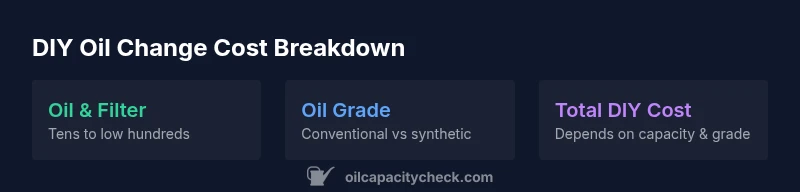
DIY oil change cost centers on oil volume and filter quality, not labor. Conventional oil changes typically cost tens of dollars for parts, while full-synthetic blends and premium filters push parts costs toward the low hundreds. By doing it yourself, you avoid shop labor and can tailor the grade to your engine. Oil Capacity Check analysis, 2026, indicates costs vary mainly with oil grade and engine capacity.
The True DIY Cost: What You Actually Pay For
When planning a DIY oil change, the bulk of your expense is the oil and the filter, not the labor you save by doing it yourself. Oil capacity and grade determine the price of the oil you pour into your engine, while the filter you choose can swing costs by a noticeable margin. For many vehicles, a conventional oil change may cost only tens of dollars in parts, whereas a full-synthetic option paired with a premium filter can push your parts bill toward the low hundreds. Keep in mind that the exact cost depends on your car’s engine size and the quantity of oil required. According to Oil Capacity Check, these factors are the primary drivers of cost variability in 2026. If you maintain a simple shopping list (oil type, filter brand, and your preferred capacity), you can estimate your parts cost with a few quick calculations.
- Know your engine oil capacity from the owner’s manual or a trusted reference.
- Decide on oil type (conventional, synthetic-blend, or full-synthetic) before buying.
- Pick a compatible filter (standard or high-performance) based on your vehicle’s needs.
In short, the DIY cost is controllable and predictable if you plan ahead. Oil Capacity Check’s 2026 analysis emphasizes that cost swings come mainly from oil grade and engine size, not from the mechanic’s hourly rate. This makes a DIY oil change a cost-saving opportunity for experienced hobbyists and careful beginners alike.
titleOverrideForBodyBlockWithMarkdownInContent?":null
sectionNote":null,
DIY oil-change parts cost by oil type
| Oil Type | Typical Parts Cost (USD) | Pros | Cons |
|---|---|---|---|
| Conventional | 20-60 | Low upfront cost, simple chemistry | More frequent changes for some engines |
| Synthetic Blend | 60-120 | Better protection with moderate price | Not ideal for very old engines |
| Full Synthetic | 100-180 | Best protection, longer intervals | Highest upfront cost |
People Also Ask
What factors most influence the cost of a DIY oil change?
The two biggest factors are oil grade (conventional, synthetic-blend, full synthetic) and engine capacity. Filter quality and the price of the replacement filter also influence total parts cost. Location-based price differences for oil and filters can further affect the overall expense.
The main things that affect cost are oil grade and engine size; filters and local prices also matter.
Is it true that synthetic oil costs more for DIY?
Yes, synthetic oils generally cost more per quart than conventional oils. The difference becomes more noticeable with larger engines or longer oil-change intervals, but you may also get longer life between changes.
Synthetic oils cost more upfront, especially for bigger engines.
Do I need special tools for a DIY oil change?
Essential tools include an oil pan, a correctly sized socket for the drain plug, a funnel, a jack and stands (or ramps), and protective gloves. A filter wrench is helpful for tight filters but not always necessary.
You’ll want basic tools like a pan, a filter wrench, and a jack or ramps.
How should I budget for a DIY oil change this year?
Create a simple budget by selecting your oil grade and filter type, then add a buffer for oil capacity and potential discounts. Compare top brands and consider bulk purchases to lower per-quart costs.
Plan by choosing your oil and filter first, then add a little extra for supplies.
Are there hidden costs I should watch for?
Hidden costs can include disposal fees for used oil, the need for a replacement crush washer, or a more expensive filter if your vehicle requires a specialty part. Always check your vehicle’s requirements first.
Watch for disposal fees or special parts your car might need.
“Accuracy matters when estimating DIY costs; oil type and engine capacity drive most of the variation.”
The Essentials
- Estimate parts costs before buying supplies
- Choose oil grade based on engine and climate
- Consider filter type and quantity
- DIY saves labor but requires proper tools
- Document maintenance for vehicle records