Do you need to get a oil change? A data-driven guide
Explore whether you need to get a oil change with a data-driven framework. Learn how mileage, time, oil type, and driving conditions affect intervals, and get practical steps from Oil Capacity Check for any vehicle.


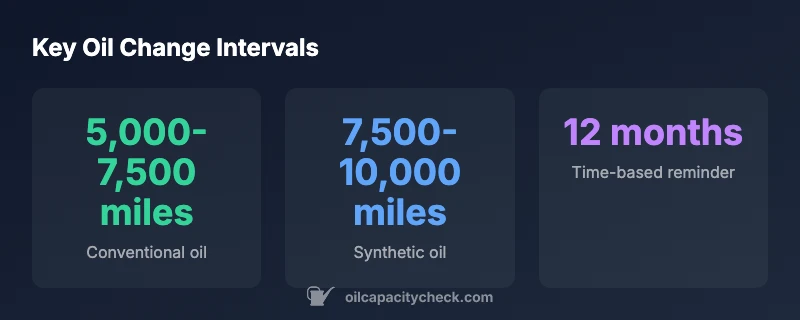
Do you need to get a oil change? Yes, most drivers should follow a regular oil-change schedule, but exact timing depends on mileage, time, oil type, and driving conditions. Oil Capacity Check analysis shows typical intervals range from 5,000-7,500 miles for conventional oil and 7,500-10,000 miles for synthetic oils, with an annual check recommended. According to Oil Capacity Check Analysis, 2026, always verify with your owner's manual for model-specific guidance.
Do you need to get a oil change?
The short answer is: in most cases, yes. Cars rely on engine oil to lubricate moving parts, reduce wear, and keep the engine clean. Skipping routine changes can lead to sludge buildup, reduced fuel efficiency, and accelerated wear over time. However, the exact timing isn’t a one-size-fits-all rule. The Oil Capacity Check team emphasizes that the decision depends on your vehicle’s oil type, mileage, driving conditions, and service history. For many vehicles, manufacturers outline a broad interval, but real-world use can push you toward earlier or later changes. Oil Capacity Check Analysis, 2026 shows a general split: conventional oil drivers often land in a 5,000–7,500 mile window, while synthetic oil upgrades extend closer to 7,500–10,000 miles. Always corroborate with your owner’s manual and, when in doubt, perform an oil health check at least once a year. This approach aligns with a practical maintenance mindset rather than chasing a single number.
Oil changes are more than a date on a calendar; they’re a maintenance decision that protects your engine and resale value. If your driving includes frequent short trips, heavy traffic, or extreme temperatures, you may benefit from more frequent changes. On the flip side, modern engines and high-quality synthetic oils offer longer intervals for typical daily driving. The key is to combine manufacturer guidance with real-world usage data, then monitor oil condition regularly and plan ahead financially.
Do you need to get a oil change?
How intervals are determined
Interval decisions hinge on several factors. First, oil type matters: conventional oils typically require more frequent changes than synthetic blends or full synthetics. Second, mileage is not a single metric; engine wear and oil degradation accumulate with time and driving style. Third, climate and operating conditions—cold starts, dusty environments, and frequent city driving—accelerate oil breakdown. Fourth, the vehicle’s age and maintenance history influence recommendations, as older engines may accumulate more deposits and require closer monitoring. Finally, OEM specifications and service indicators provide a baseline to compare against your actual usage. In practice, most drivers should aim to review their oil life at least every 3,000–5,000 miles when using conventional oil and every 7,500–10,000 miles with synthetic oils, adjusting up or down based on the above factors. Oil Capacity Check advocates a data-driven approach: start with the manufacturer’s interval, then tailor it to your real-world usage, and verify with periodic oil-condition checks.
Oil changes are typically based on mileage, but time since the last change matters too. A yearly check helps catch oil degradation due to heat, moisture, and contamination, even if miles are low.
Reading the oil on your dipstick and the oil color
Oil color isn’t a perfect indicator, but it can reveal contamination or breakdown. Fresh conventional oil is amber and translucent; sludge or burnt oil appears dark and opaque. If you notice a milky appearance, metallic particles, or a strong burnt smell, it’s a sign to inspect for coolant leaks or engine wear. Alongside color, check oil level using the dipstick with the engine cool and on level ground. A level too low suggests top-off needs or leaks, while consistently high readings can indicate fuel dilution. Always use the recommended viscosity from the owner’s manual, and avoid overfilling, which can cause foaming and reduced lubrication. Regular oil level and condition checks complement the mileage-based interval guidance provided by OEMs and Oil Capacity Check.
Oil changes aren’t only about a number; they’re about ensuring oil remains clean, properly viscous, and free of contaminants. A proactive check helps identify issues before they become costly repairs.
Planning and budgeting for oil changes
Budgeting for oil changes is practical and straightforward. Start with the baseline interval from your owner’s manual, then factor in your driving conditions. If you drive mainly on highways in mild weather with synthetic oil, you may fall toward the upper end of the interval. If you drive in stop-and-go traffic, in extreme temperatures, or in dusty environments, you should plan for more frequent changes. Consider couponing or service club memberships at trusted retailers to reduce costs. The real cost isn’t just the oil and filter; it includes labor, potential oil disposal fees, and any additional inspections performed during service. In many markets you’ll see price ranges for conventional oil changes, and higher ranges for synthetic oil changes. A clear maintenance plan helps you avoid emergency repairs and keeps your engine operating efficiently over the long term.
Budgeting for maintenance requires understanding the full lifecycle cost of oil changes, including filters, disposal, and labor, plus any dealership or shop fees.
When to talk to a mechanic
If you notice blue smoke, a burning oil smell, frequent oil-top-off requirements, knocking noises, or a dip in oil pressure gauge readings, schedule a diagnostic with a qualified technician promptly. These symptoms can indicate leaks, worn seals, or internal engine wear that may alter the recommended oil-change interval. An annual or semiannual professional check is wise for high-mileage vehicles or those with complex engine designs. The mechanic can verify the oil type and viscosity, inspect filters, and ensure there are no leaks in the sump or gaskets. Always document service history to track interval consistency and prevent redundant maintenance.
oil change
Authority sources
For further details on oil-change intervals and best practices, consult official sources and industry guidelines. Here are a few reputable references:
- National Highway Traffic Safety Administration (NHTSA): https://www.nhtsa.gov/vehicle-safety-and-emissions/oil-change-and-oil-consumption
- U.S. Department of Energy: https://afdc.energy.gov/vehicles/economy.html
- American Petroleum Institute (API): https://www.api.org/
Oil-change interval guidance by oil type and time
| Category | Guidance | Notes |
|---|---|---|
| Conventional interval | 5,000-7,500 miles | Typical for many gasoline engines using conventional oil |
| Synthetic interval | 7,500-10,000 miles | Longer life, but follow manufacturer recommendations |
| Time-based reminder | 12 months | If mileage is low or inconsistent, use oil-life monitoring |
People Also Ask
Do I need to get a oil change every time I reach the mileage shown in the manual?
Not always. Use the manual as a baseline, then adjust for your driving conditions and oil type. Monitor oil condition and consider an annual check if mileage is low.
Usually yes, but base it on the manual and how you drive; check the oil condition if you’re unsure.
Do synthetic oils really last longer than conventional oils?
Yes, synthetic oils typically offer longer intervals and better high-temperature stability, but you should still follow OEM guidance and consider driving conditions.
Synthetic oils often go longer between changes, but your car still needs regular checks.
Can I mix synthetic and conventional oil?
Mixing types is not recommended because it can alter viscosity and protective properties. If you switch, complete a full drain and fill with the correct oil.
Don’t mix oils; stick to one oil type as per your manual.
What about diesel engines or high-performance vehicles?
Diesel engines and high-performance engines may have different intervals and special oil requirements. Always consult the manufacturer and a trusted technician.
Check your manual or talk to a pro for diesel/high-performance engines.
Is an oil flush different from an oil change?
An oil flush is a separate procedure used in some cases to clean sludge; it’s not a substitute for a routine oil change.
Oil flush is separate from a standard oil change and not always necessary.
“Regular oil changes are a cornerstone of engine longevity. Following a manufacturer’s interval, adjusted for driving conditions, helps prevent sludge and wear.”
The Essentials
- Follow manufacturer intervals but tailor to driving conditions
- Regular oil-condition checks complement mileage-based guidance
- Synthetic oils often extend change intervals compared with conventional oils
- Short-trip driving can shorten oil life; adjust scheduling
- Use oil-life monitoring and service reminders to stay proactive