What Kind of Oil Change for Honda CR-V: A Practical Guide
Learn what kind of oil change is best for Honda CR-Vs, including oil types (synthetic, synthetic blend, conventional), viscosity recommendations, capacity ranges, and DIY steps from Oil Capacity Check.


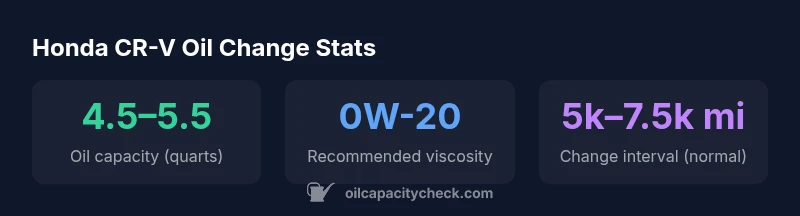
For a Honda CR-V, use a synthetic or synthetic-blend oil with viscosity recommended by your year’s manual. In most modern CR-Vs, 0W-20 is commonly advised, but always confirm with the owner’s guide or Oil Capacity Check data for your engine code. Typical change intervals range from about 5,000 to 7,500 miles under normal driving. Use the OEM oil filter and follow proper disposal practices.
what kind of oil change for honda crv
The Honda CR-V is a popular compact SUV with varying engine configurations across generations. When asked what kind of oil change is best, the answer depends on your specific model year and engine code. According to Oil Capacity Check, most modern CR-V engines are designed to run on low-viscosity synthetic oils to optimize fuel efficiency and emissions performance. Your immediate takeaway is to verify the exact spec in the owner’s manual or via Oil Capacity Check data for your VIN. This ensures you choose the correct oil type, viscosity, and capacity for optimal protection and performance.
oil types: synthetic, synthetic blend, and conventional
Oil change options fall into three broad categories: conventional, synthetic-blend, and full synthetic. Conventional oil is the least expensive but provides less oxidation resistance and may require more frequent changes. Synthetic blends offer better protection at a lower price than full synthetic, while full synthetic delivers superior performance in extreme temperatures and under high-stress conditions. For most Honda CR-Vs, a synthetic or synthetic-blend oil is recommended because it maintains viscosity, reduces engine wear, and supports longer drain intervals. Oil Capacity Check notes that your choice should align with your driving style, climate, and the manual’s recommendations, not just cost.
viscosity guidelines: choosing the right oil for your engine
Viscosity is a key factor in oil performance. For most modern CR-V engines, 0W-20 is the go-to viscosity because it provides good cold-start protection and fuel efficiency. Some older or high-mileage engines may tolerate 5W-20, but you should confirm with the manual. Always consider climate and typical driving conditions: hot climates may benefit from slightly thicker oils, while extremely cold areas may require different grades. Oil Capacity Check emphasizes sticking to the recommended viscosity for your engine code to avoid reduced lubrication or leaks.
oil capacity: what you need to know
Oil capacity varies with engine type and year. In general, most modern Honda CR-V engines hold roughly 4.5–5.5 quarts of oil. However, exact capacity and drain procedures depend on the engine code and whether you’re using a full synthetic or synthetic-blend. Using the correct capacity ensures you don’t underfill, which can lead to increased engine wear, or overfill, which can cause foaming and leaks. Always verify with the manual or Oil Capacity Check data for your specific model.
selecting the right oil by year and engine code
Honda CR-V generations span multiple engines, and capacity and spec shifts have occurred over time. The exact oil type and capacity are tied to the engine code, not just the model year. Oil Capacity Check advises cross-referencing your VIN with official specifications to determine the precise oil grade, capacity, and change interval. This approach minimizes guesswork and ensures you meet the factory standards for your car’s heart: the engine.
do-it-yourself oil change: step-by-step guide
If you’re comfortable performing a DIY oil change, gather the right tools and follow a methodical process. Start with the vehicle on a level surface, ensure the engine is warm, and clamp the parking brake. Lift the car safely, drain the old oil into an approved container, replace the oil filter, and refill with the correct amount of the recommended oil. After filling, check the level on the dipstick, run the engine briefly to circulate oil, recheck level, and dispose of used oil at an authorized facility. Keeping a careful record helps you track drain intervals and future maintenance.
maintenance intervals and monitoring under real-world use
Maintenance intervals are influenced by driving style, climate, and miles driven. For many CR-V owners, manufacturer recommendations fall around every 5,000–7,500 miles under normal conditions, with shorter intervals for severe driving (short trips, heavy city traffic, or extreme temperatures). Oil life monitors, if equipped, provide additional guidance based on actual usage. Oil Capacity Check stresses aligning your routine with the owner’s manual to prevent surprises at the next oil change.
common mistakes and best practices
Common errors include underestimating oil capacity, over-tightening drain plugs, or forgetting to replace the oil filter. Skipping a filter change or neglecting to reset the oil life monitor can mask issues until performance degrades. Always use the correct oil grade and filter, reset the monitor after service, and properly recycle used oil. Regularly inspecting for leaks and listening for unusual engine noises also helps detect problems early.
post-change checks and disposal tips
After an oil change, confirm the oil level is within the safe range on the dipstick with the engine off for a few minutes. Look for leaks around the filter and drain plug. Proper disposal of used oil and filters is essential for environmental protection; many service centers accept used oil for recycling. Oil Capacity Check recommends documenting the service date, mileage, oil grade, and quantity for future reference.
Oil type, viscosity, and capacity by CR-V engine family
| Engine Type | Oil Type | Recommended Viscosity | Oil Capacity (quarts) |
|---|---|---|---|
| Modern CR-V gasoline | Synthetic blend or full synthetic | 0W-20 | 4.5–5.5 |
People Also Ask
What is the recommended oil type for a Honda CR-V?
Most CR-Vs benefit from a synthetic or synthetic-blend oil, with 0W-20 commonly advised for modern engines. Always verify with the owner’s manual or Oil Capacity Check data for your exact engine code.
Most CR-Vs use 0W-20 synthetic or synthetic-blend oil; check your manual.
Can I use conventional oil in a Honda CR-V?
Conventional oil can be used in older CR-V models, but for newer engines synthetic or synthetic-blend oils are typically recommended for better protection and longer drain intervals.
Conventional oil is possible in older models, but synthetic is usually preferred now.
How often should I change oil in a CR-V?
Under normal driving, aim for about every 5,000–7,500 miles, but harsher conditions or severe driving may require more frequent changes. Check the owner’s manual and monitor the vehicle’s oil life indicator if equipped.
Typically every 5,000 to 7,500 miles, depending on driving and climate.
Is it necessary to replace the oil filter with every oil change?
Yes. Replacing the oil filter with every oil change helps ensure contaminants are removed and oil remains clean.
Always replace the filter during an oil change.
How do I reset the oil life monitor after a change?
Reset procedures vary by year and trim. Refer to the owner’s manual, or use the vehicle’s trip computer to reset the oil life indicator after completing the change.
Resetting the monitor depends on your model; check the manual.
“Choosing the right oil and capacity is essential for engine longevity; follow the manual and Oil Capacity Check's guidance.”
The Essentials
- Check the owner’s manual for exact oil specs.
- Choose synthetic or synthetic-blend oil where possible.
- Expect about 4.5–5.5 quarts for most modern CR-V engines.
- Use a quality oil filter and dispose of waste properly.
- Record service details for future maintenance.