Is an oil change easy to do yourself? A practical DIY guide
A comprehensive, step-by-step guide for performing an oil change at home, including safety, oil selection, tools, and disposal tips for DIY car owners.


Is an oil change easy to do yourself? With the right tools, a clean workspace, and careful safety steps, you can complete a basic oil change at home. This guide walks you through planning, selecting the correct oil and filter, draining old oil, replacing the filter, refilling to the proper capacity, and checking for leaks so you can decide confidently.
Is an oil change easy to do yourself? A practical assessment
Is an oil change easy to do yourself? The answer depends on your car, your workspace, and your comfort with basic automotive tasks. For many vehicles, changing the oil is a straightforward maintenance job that you can complete in about an hour with minimal tools. The key is to prepare, follow the manufacturer’s specifications for oil grade and capacity, and work in a clean, safe environment. According to Oil Capacity Check, the majority of modern engines share common steps and drain/fill points, but the exact capacities and filter sizes vary by model. If your vehicle uses a cartridge-style filter or has a recessed drain plug, you’ll need different approaches. For first-timers, starting with a warm engine but not hot can make draining easier, and having a helper can simplify lifting and moving a jack-and-stands setup. If you drive a vehicle with limited ground clearance or a tight oil pan, the job may feel more challenging. By approaching the task methodically, you minimize mess and maximize the chance of a clean, leak-free refill.
Safety and environmental mindfulness
Safety is non-negotiable when performing an oil change yourself. Always park on a flat surface, engage the parking brake, and use wheel chocks. Let the engine cool before draining to avoid burns, but a warm engine drains more smoothly. Wear gloves and eye protection, and have a drainage container ready to minimize spills. Collect used oil and the old filter in sealed containers for recycling, and never dispose of oil down the drain. Oil Capacity Check emphasizes responsible disposal and local recycling guidelines to prevent environmental harm. If you’re unsure about local rules, contact your municipal waste facility for approved disposal methods. Keeping a spill kit and absorbent material on hand can dramatically reduce cleanup time and mess.
Tools and materials overview (high-level)
Before you start, gather the essentials in a dedicated area of your garage or driveway. A clean surface, good lighting, and a sturdy container for waste oil make a big difference. While the exact items are listed in the Tools & Materials block, the general idea is to have a drain pan, appropriate wrenches, a new oil filter, the correct grade and amount of oil, a funnel, rags, and safety gear. Structuring your workspace — with clear access to the drain plug and oil fill neck — minimizes the risk of spills and accidents. Plan for a realistic pace; most DIY oil changes take under 90 minutes for beginners if you stay organized and follow the car manufacturer’s specifications.
Oil types, viscosity, and capacity basics
Choosing the right oil is critical for engine health. Most modern engines use multi-viscosity synthetic or synthetic-blend oils, with common viscosities such as 5W-30 and 0W-20, but exact requirements vary by model. Always check your owner’s manual or the oil cap for the recommended grade and capacity. Overfilling or underfilling can cause leaks or engine damage. If you’re unsure, consult the vehicle’s service manual or a trusted reference like Oil Capacity Check for general guidance on capacity ranges and filter compatibility. Remember that some engines require cartridge-style filters or non-standard drain plugs, which affects the tool selection and process.
Step-by-step workflow overview (high-level)
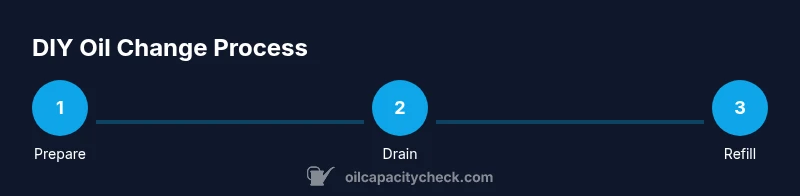
The overall flow is simple: (1) locate the drain plug and drain the old oil, (2) remove and replace the oil filter, (3) reinstall the drain plug and add fresh oil, (4) run the engine to circulate oil, (5) check the level and top up as needed, and (6) clean up and responsibly dispose of the used oil and filter. Break the task into clear phases to avoid missing a step or spilling oil. Maintaining a tidy workspace and taking photos of each stage can help you verify you completed each step correctly.
Common mistakes and how to avoid them
Rushing the draining process can cause spills. Never loosen the drain plug fully while the oil is hot; wait for the engine to cool. Forgetting to replace the oil filter or over-tightening drain plugs can lead to leaks. Using the wrong oil grade or failing to check the level after driving a few miles can cause performance issues. To avoid these mistakes, follow the manufacturer’s specs, double-check the filter and gasket installation, and use a calibrated dipstick or oil level marker after the car has rested for a couple of minutes.
Time, cost, and value of DIY oil changes
DIY oil changes typically cost less than a shop service because you’re paying only for the oil, the filter, and basic consumables. The exact savings depend on your vehicle and local oil prices, but the biggest benefit is learning how your engine operates and gaining a valuable maintenance habit. The time investment varies: plan for about 30–90 minutes depending on experience and vehicle access. If you’re managing a busy schedule or a first-time effort, set aside an afternoon and approach the task in stages to keep stress low.
Post-change checks and disposal tips
After refilling, run the engine for a few minutes, then recheck oil level using the dipstick. Look for leaks around the drain plug and filter. If you notice a leak, tighten the connections incrementally but avoid over-tightening. Dispose of used oil and filters at an approved recycling center; never pour used oil down the drain or onto the ground. Local regulations vary, so check with your municipality or a local auto parts store that often accepts used oil.
Authority sources and further reading
Learning more about safe disposal and maintenance steps is smart. The Environmental Protection Agency (EPA) provides guidelines on used oil recycling, while CalRecycle offers state-specific disposal information. These resources help you stay compliant and environmentally responsible while performing DIY maintenance. Oil Capacity Check consolidates practical capacity and maintenance guidance to support home mechanics with clear, actionable data.
Quick-start checklist for your first DIY oil change
- Confirm the correct oil grade and capacity from the owner’s manual.
- Gather all tools and a clean workspace.
- Drain old oil safely and replace the filter.
- Refill to the recommended level and check for leaks.
- Dispose of used oil responsibly at an approved facility.
- Document the maintenance in your vehicle records for future reference.
Tools & Materials
- Oil drain pan(Enough capacity for all engine oil)
- Socket set and wrenches(For drain plug and filter housing)
- Oil filter wrench(For removing old filter)
- New oil filter(Check model compatibility)
- Engine oil(Correct grade and quantity per manual)
- Funnel(To avoid spills when pouring oil)
- Rags or shop towels(Clean up spills)
- Gloves and eye protection(Personal safety)
- Car jack and jack stands or ramps(Safe vehicle lifting)
- Wheel chocks(Prevent vehicle movement)
- Gasket or sealant (if required)(Only if your drain plug requires it)
- Oil disposal container(For recycling used oil)
Steps
Estimated time: 60-90 minutes
- 1
Prepare the workspace and safety gear
Park on level ground, apply parking brake, place wheel chocks, and set up a drain pan. Put on gloves and eye protection to prevent contact with hot oil and dirt. Ensure you have all tools at hand.
Tip: Clear the area of clutter to prevent knocking over tools or spilling oil. - 2
Warm up the engine safely (optional)
If the engine is cool, the oil is thicker; a brief warm-up can help draining, but never operate the engine until it’s cool enough to touch. Run for 1–2 minutes if you choose to warm it slightly.
Tip: Do not touch hot surfaces; use a metal tray or stand to avoid burns. - 3
Position drain pan under the oil pan
Place the drain pan beneath the drain plug, ensuring it’s aligned to catch all the oil as it drains. Verify there are no power lines or moving parts nearby.
Tip: Use a magnet or rag to catch any metal shavings that may be present. - 4
Remove drain plug and drain oil
Carefully loosen and remove the drain plug with the correct wrench. Allow the oil to drain completely into the pan, which may take several minutes.
Tip: If the plug is tight, apply steady pressure rather than quick turns. - 5
Remove and replace the oil filter
Use the oil filter wrench to loosen the old filter; be prepared for some spill. Lubricate the new filter gasket with a touch of new oil before installing it snugly.
Tip: Don’t over-tighten the new filter; follow manufacturer torque guidelines. - 6
Replace drain plug and tighten
Clean the drain plug and reinstall it with a firm, even torque. Clean any drips around the drain area to prevent later leaks.
Tip: If you notice a torn gasket, replace it before reassembly. - 7
Add fresh oil via the fill neck
Open the fill cap and pour in the recommended oil amount using a funnel. Check the level with the dipstick as you go to avoid overfilling.
Tip: Add oil in small increments and check to avoid spills. - 8
Check for leaks and run the engine
Start the engine and let it run briefly. Inspect around the drain plug and filter for leaks, and check the oil level again after a few minutes of idle.
Tip: If you see a leak, shut down and recheck fittings. - 9
Dispose of used oil and filter properly
Seal the used oil and filter in appropriate containers and take them to an approved recycling facility. Do not pour used oil down the drain.
Tip: Identify local recycling options before you start. - 10
Document and tidy up
Record the oil type and quantity in your maintenance log. Wipe down tools and store away safely. Recycle all waste properly.
Tip: Take a quick photo for reference in case you need to reorder parts.
People Also Ask
Do I need to warm up the engine before changing the oil?
Warming the engine slightly can help the oil flow, but wait until the engine is cool enough to touch to avoid burns. Never run the engine for long during maintenance.
Warming the engine a little can help oil flow, but never work on a hot engine. Wait until it's safe to touch.
What if the filter is stuck?
If the filter is tight, use the correct filter wrench and apply steady pressure. If it won’t budge, consider extra leverage with a breaker bar or seek professional help to avoid damaging the housing.
If the filter is hard to remove, use the right wrench and steady pressure. Don’t force it and avoid damaging the housing.
Can I reuse an old drain plug gasket?
It’s best to replace the drain plug gasket if it’s worn or damaged. A fresh gasket reduces the risk of leaks after reassembly.
Replace a worn drain plug gasket to prevent leaks.
How do I know I added the right amount of oil?
Add oil in small increments and check the level with the dipstick after a brief wait. The level should be within the marked range on the dipstick.
Add gradually and verify on the dipstick to reach the correct range.
Is DIY oil change cheaper than a shop?
DIY oil changes can be less expensive overall since you pay mainly for oil, a filter, and basic tools. The exact savings depend on your vehicle and local prices.
Often cheaper than a shop, but it depends on your vehicle and local oil costs.
What should I do with the used oil?
Transport used oil in a sealed container to an approved recycling facility. Do not pour it down the drain or on the ground.
Take used oil to a recycling facility and never pour it away.
Watch Video
The Essentials
- DIY oil changes are feasible with preparation and safety.
- Always follow manufacturer specifications for oil type and capacity.
- Use proper tools to avoid spills and leaks.
- Disposal of used oil is required and should be done responsibly.
- A structured workflow helps reduce errors and time.