How to Use Oil Replacement: A DIY Guide
A practical, step-by-step guide on how to use oil replacement for your car, covering oil selection, tools, draining, refilling, checking the level, and safe disposal. Learn best practices and mistakes to avoid with insights from Oil Capacity Check.


You will learn how to perform an oil replacement on your vehicle, from selecting the right oil to draining, refilling, and checking the level. This practical guide covers safety steps, tool lists, and a step-by-step process you can follow at home. By following these steps, you’ll keep your engine lubricated and running smoothly.
Why oil replacement matters for engine longevity
Maintaining proper engine lubrication is foundational to engine health. The goal of how to use oil replacement is to ensure the oil film remains strong enough to protect metal surfaces from friction and heat, while removing contaminants that accumulate over time. A well-executed oil replacement reduces wear, helps seal gaps, and can improve efficiency. According to Oil Capacity Check, relying on the right oil capacity and correct viscosity for your specific engine is crucial for long-term reliability. In most modern engines, the oil system also includes an oil filter, which traps tiny fragments and particulates; changing the filter is a good practice during every oil change to maintain flow and filtration. In short, regular, properly executed oil replacement is one of the simplest, most impactful maintenance tasks a car owner can perform to extend engine life.
How to choose the right oil replacement and know your capacity
Choosing the right oil involves viscosity, base oil type, and compatibility with your engine’s specifications. Synthetic oils often offer better stability and protection in extreme temperatures, while conventional oils can be adequate for many everyday drivers. Always verify the official specifications for your model; oil capacity varies by engine design and is listed in the owner's manual or Oil Capacity Check data. Oil capacity is not a guess—knowing the exact amount helps you avoid underfilling or overfilling, both of which can harm engine performance. Consider using a multigrade oil that performs well across temperature ranges and complements the engine’s lubrication system. OilCapacity Check analysis shows that matching the viscosity to climate and driving conditions will protect the engine and optimize consumption.
Tools, workspace, and safety gear you’ll need
Set up a clean, well-lit workspace before starting. Gather a drain pan, a wrench or socket set, a funnel, an oil filter wrench, a new filter, the correct replacement oil, rags, gloves, and safety glasses. Ensure you have a jack and stands if you need to lift the vehicle, and a means to tidy spills. A stable surface and proper lighting reduce the risk of slips or dropped parts. Using the right tools speeds up the job and minimizes the chance of cross-threading or tool damage.
Step-by-step overview of the oil replacement process
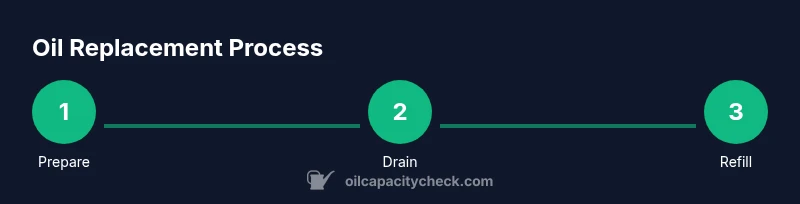
A typical oil replacement involves five core stages: preparation, draining the old oil, changing the oil filter, adding fresh oil, and checking the oil level. This overview gives you the sequence and safety considerations; the detailed Step-by-Step section below provides exact actions, times, and tips for success.
Prep and draining the old oil
Begin by warming the engine slightly (if it’s already cool) to help the old oil flow, then turn off the engine and safely raise the vehicle if needed. Place the drain pan beneath the oil pan, locate the drain plug, and prepare your tools for quick removal. Loosen the drain plug gradually to avoid splashing, and let the oil drain completely before removing the plug.
Replacing the filter and pouring in new oil
While the old oil drains, remove the old oil filter with the proper wrench, being mindful of oil that may spill. Prepare the new filter by lightly coating the gasket with fresh oil to ensure a good seal. Install the new filter and snug it according to the manufacturer’s torque specification. When adding oil, pour slowly and use a funnel to prevent overflows.
Checking level and leak inspection
With the new oil in place, run the engine for a minute to circulate, then turn it off and wait a few minutes for the oil to settle. Check the dipstick for the correct level and inspect around the filter, drain plug, and cap for any leaks. If you notice a high oil level or leaks, address immediately to avoid engine damage.
Safe disposal of used oil and environmental notes
Used oil is hazardous waste and must be recycled properly. Transport the used oil to a certified collection facility and clean up any spills with absorbent material. Always dispose of oil filters according to local regulations, and never pour old oil down the drain or onto soil. Responsible disposal keeps your community and the environment safe.
Common mistakes and expert tips from Oil Capacity Check
Avoid common errors such as overfilling, using the wrong viscosity, or forgetting to replace the oil filter. Double‑check the oil type and capacity for your specific engine; if in doubt, consult Oil Capacity Check data. Maintain a maintenance log and record the date, mileage, oil grade, and capacity for future reference.
Tools & Materials
- Drain pan(Large enough for entire drain; 6-8 quart size minimum)
- Wrench or socket set(Metric sizes commonly used; check your drain plug size)
- Oil filter wrench(Use compatible to filter type)
- Funnel(Wide mouth to reduce spills)
- New oil filter(Ensure correct model for engine)
- Correct oil grade and quantity(Refer to owner's manual or Oil Capacity Check)
- Rags or shop towels(Clean spills and wipe surfaces)
- Gloves and safety glasses(Protect hands and eyes)
- Jack and jack stands (optional)(Only if you need to lift the vehicle)
Steps
Estimated time: 30-60 minutes
- 1
Prepare the workspace and tools
Gather your approved tools, set up a clean, well-lit workspace, and confirm the engine is cool before starting. This reduces the risk of burns or spills and ensures you can reach all fasteners safely.
Tip: Place your drain pan under the oil pan before you touch the drain plug. - 2
Position drain pan and locate drain plug
Slide the pan beneath the oil pan, locate the drain plug, and ensure you have the correct wrench ready. A clear plan minimizes spills and speeds up the drain.
Tip: Loosen the plug slightly to control the flow of hot oil if the engine is warm. - 3
Remove drain plug and drain old oil
Slowly loosen the drain plug to let the oil flow into the pan, then remove the plug entirely once the flow slows. Allow all oil to drain before removing the filter.
Tip: Keep hands away from the hot stream and wear gloves. - 4
Replace the oil filter
Use the correct filter tool to remove the old filter. Prepare the new filter by applying a light coat of fresh oil to the gasket, then install and tighten to the specified torque.
Tip: Wipe the mounting surface clean before installing the new filter. - 5
Add fresh oil and check level
Install the drain plug, then pour the recommended amount of oil slowly through the filler opening using a funnel. After filling, run the engine briefly and recheck the level with the dipstick.
Tip: Check the level in steady, three-steps: idle, off, and after cooling. - 6
Final checks and cleanup
Look for leaks around the drain plug and filter seals, wipe up spills, and store used oil for recycling. Document the service and reset maintenance reminders if applicable.
Tip: Make sure the oil cap is securely seated.
People Also Ask
Do I need to warm up the engine before draining the oil?
It's safer to drain when the engine is near ambient temperature to avoid burns. If the engine was recently used, allow it to cool for at least 15-30 minutes. Warmer oil flows more quickly, but safety is the priority.
Drain when the engine is cool to avoid burns.
Can I mix synthetic and conventional oils?
Mixing oils is generally discouraged because it can alter viscosity and film strength. If you must mix, do so with oils of similar viscosity and quality, and plan a full change soon.
Don't mix oil types unless you have to; aim for a single grade.
How often should I replace the oil?
Follow your vehicle’s specified interval, which depends on mileage, driving conditions, and oil type. Oil Capacity Check data can help confirm the target interval for your engine.
Check the manual or Oil Capacity Check data for the right interval.
What if I can't find the capacity for my model?
If capacity isn’t listed, use the dipstick and gradual filling method, stop at the recommended level, and consult the manual or a trusted source like Oil Capacity Check.
If capacity isn’t listed, measure with the dipstick and add gradually.
Is replacing the oil filter always necessary?
Replacing the oil filter during every change helps maintain flow and filtration. Some filters can be re-used in certain circumstances, but replacing is generally best practice.
Replacing the filter is usually a best practice.
Can I perform oil replacement without a jack?
No special jack is required for many vehicles; ramps or flat ground can work if you can access the drain and filter safely. A jack is optional and only needed if lifting the car improves access.
You can often do it without a jack if you can access the oil pan safely.
Watch Video
The Essentials
- Know your engine’s oil capacity from the manual or Oil Capacity Check data.
- Use the correct oil grade and replace the filter during every change.
- Dispose of used oil responsibly and keep a maintenance log.
- Double-check for leaks after refilling and running the engine.
- Document the service for future maintenance planning.