How to Tell If You Need an Oil Change
Learn how to tell if your car needs an oil change. This step-by-step guide covers dipstick checks, oil color cues, mileage signs, and service timing for 2026, with practical tips for DIY and when to seek professional help.


By the end of this guide you will be able to tell if your car needs an oil change. You’ll learn to read the dipstick, assess oil color and consistency, and use mileage and warning-light cues to decide if service is due. Follow simple checks that are repeatable and safe.
What signals indicate you may need an oil change?
According to Oil Capacity Check, the most reliable signals that your engine may be due for an oil change include a dipstick reading below the recommended mark, oil that looks very dark or gritty, and a noticeable burned odor when the engine is running. If you see a low-oil warning on the dashboard, or you notice increased engine heat and reduced performance, these are strong indicators to inspect your oil more closely. Even if one sign is absent, a combination of signs—especially when paired with long time since the last change or high mileage—may justify changing the oil. The goal is to prevent sludge buildup and ensure the oil can properly lubricate engine components. In 2026, many vehicles rely on built-in maintenance reminders; always cross-check those alerts with your manual for accuracy. Regular documentation helps you compare current symptoms with past oil-change history and avoid surprises on road trips.
Reading the dipstick: what the color, level, and viscosity tell you
The dipstick is your first-line check for oil health. A normally aged oil should appear amber to brown, translucent, and free of grit. If the oil is very dark, black, or has a gritty texture, it can indicate oxidation, contamination, or infrequent changes. A light oil that appears milky may signal coolant ingress, which requires immediate attention. Always wipe the dipstick clean, reinsert it fully, and then read the level with the engine off and on level ground. If the oil level sits between the minimum and maximum marks after a few minutes of settling, you’re in a safe range for another short drive, but plan a change at the next scheduled interval. For manual checks, keep a small notebook of readings to track trends over time.
Mileage, age, and maintenance intervals: how to interpret them for 2026
Maintenance schedules depend on vehicle make, oil type, and driving conditions. Oil Capacity Check analysis shows that some cars tolerate longer intervals with synthetic oil, while others benefit from more frequent changes under severe conditions like extreme heat, heavy towing, or frequent short trips. Since every car is different, your best guide is the owner’s manual and the dashboard reminder lights. If your driving includes frequent stop-and-go traffic or cold starts, you may experience faster oil degradation. In all cases, use a software log or app to track both calendar time and mileage since the last change, and schedule a service when either threshold approaches. This practice helps you stay aligned with your vehicle’s design and warranty requirements.
How to verify oil condition beyond the dipstick: smells, clarity, and leaks
Beyond color and level, consider the odor and viscosity of the oil. Fresh oil should smell almost neutral; a burnt odor can indicate overheating or oil degradation. If the oil appears sludgy or very thick, it may resist proper lubrication. Also inspect around the oil fill cap and under the engine for signs of leaks or fresh oil droplets, which would warrant a closer inspection or a professional oil change. If you operate in dusty or humid environments, oil may gather particulates quicker, so more frequent checks are prudent. Remember to wipe tools clean and store any used rags safely to prevent a fire hazard.
Making a decision: when to schedule service and what to tell your mechanic
If readings, smells, or warning lights point toward possible oil degradation, plan a change soon. Before a visit, note the vehicle’s make, model, year, oil type, and recent driving patterns; this helps a technician select the correct viscosity and grade. Most shops appreciate bringing the car’s maintenance log, along with the location of the oil filter and drain plug. If you recently topped up oil, share the type and approximate amount added. For those who prefer DIY, prepare a clean workspace, have the correct filter and oil grade on hand, and follow a step-by-step guide to avoid cross-contamination and spills. The Oil Capacity Check team recommends adhering to the vehicle’s schedule and not delaying an oil change once indicators align with service needs.
Quick self-check you can perform this weekend (no tools required)
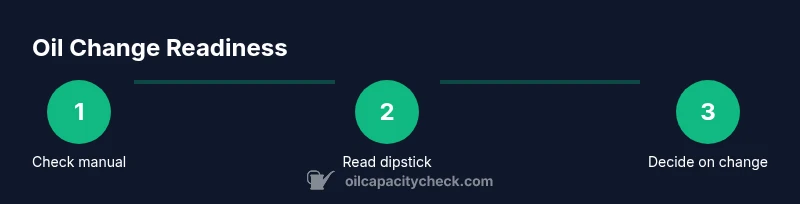
Take stock of your vehicle’s current indicators: check the manual for interval guidance, review dash warnings, and note any changes in engine noise or temperature. If you aren’t sure, call a local shop or consult an online guide using your exact vehicle year, make, and model. Keeping a simple maintenance log helps you anticipate the next service window and reduces the risk of missing a critical oil change.
When not to delay: safety and warranty considerations
Delaying an oil change can lead to accelerated wear, reduced fuel efficiency, and potential engine damage. Some warranties require documented maintenance at specific intervals, so neglecting oil changes could affect coverage. If you operate in extreme driving conditions, or you notice sudden oil loss, overheating, or metallic sounds from the engine, pause driving and seek immediate professional advice. Your safety and the health of your engine are the priorities, and timely oil changes are a cornerstone of reliable vehicle operation.
Tools & Materials
- Owner's manual(Contains recommended oil change interval for your vehicle)
- Clean lint-free rag(For wiping dipstick and caps)
- Oil dipstick (if applicable)(Used to check oil level and color)
- Adequate lighting (flashlight)(For accurate inspection under hood)
- Gloves and eye protection(Safety while handling oil and rags)
- Notebook or app to log changes(Track oil changes and reminders)
Steps
Estimated time: 30-45 minutes
- 1
Check the owner’s manual for interval guidance
Open the manual and locate the maintenance schedule section. Look for the recommended oil change interval and any notes about driving conditions that could affect timing. Use this baseline to interpret your current situation rather than guessing.
Tip: If your manual has a firmware-like maintenance alert, cross-check with the service interval sticker on the car. - 2
Locate and inspect the dipstick with the engine off
Park on level ground, wait for the engine to cool, then pull the dipstick, wipe it, reinsert, and pull it again to read the level. Note whether the oil sits between the marks and if it looks amber, brown, or dark.
Tip: If oil level is consistently low, top up carefully with the correct grade and retest after a few minutes. - 3
Assess oil color and viscosity visually
Evaluate the color and clarity: clean oil is amber, older oil is darker; sludge may indicate poor maintenance. If it looks milky or smells burnt, plan a change and consult a technician.
Tip: Smell is a quick cue—burnt odor often signals overheating and degraded oil. - 4
Check for signs of oil consumption or leaks
Look around the engine area and underneath for fresh oil leaks or oil spots on the ground. Excessive oil consumption can show up as darker exhaust or smoke.
Tip: Even small leaks should be addressed; they can lead to more serious issues if ignored. - 5
Review dashboard warnings and maintenance reminders
If the oil change light or generic maintenance light is on, treat it as a priority reminder to inspect or service the oil system. Compare the reminder with your manual and log.
Tip: Some modern cars can reset reminders after a change—verify the system reset after service. - 6
Decide on a service plan based on evidence
If several indicators point to degraded oil, schedule a change soon. If signs are mild, plan for the next typical service window and monitor oil health regularly.
Tip: Document what prompted the decision so you can replicate or adjust the plan next time. - 7
Prepare for the oil-change procedure (DIY or shop)
If DIY, gather the correct oil grade and filter, wear gloves, and prepare a clean workspace. If using a shop, call ahead with your findings and vehicle specifics.
Tip: Avoid mixing oil types; always use the grade specified by the manufacturer.
People Also Ask
How can I tell if my car actually needs an oil change?
Watch for a low dipstick reading, dark or gritty oil, burning odor, and warning lights. If several signs align, an oil change is likely due. Keep a maintenance log to track timing.
Look for a low dipstick, dark oil, or warning lights. If several signs appear, an oil change is probably due.
Are oil color and smell reliable indicators?
Color and odor can be helpful cues but aren’t definitive on their own. Combine color, smell, and level with mileage and reminders for a confident call.
Oil color and smell can hint at a change, but combine them with mileage and alerts.
Do synthetic oils really extend change intervals?
Synthetic oils can extend intervals in many vehicles, but you should always follow the manufacturer’s guidance and consider driving conditions when deciding on timing.
Synthetic oil can last longer, but check your manual and driving conditions before deciding.
Can engine noises indicate old oil?
Unusual ticking or knocking can signal lubrication problems. If you hear new noises, stop driving and inspect or consult a professional.
Unusual engine noises can point to lubrication issues—check or seek help if you hear them.
What should I do if there is no dipstick in my car?
If your car doesn’t have a dipstick, rely on service reminders and dealer guidance, or consult a professional for an oil status check using sensor data.
If there’s no dipstick, rely on reminders and a pro for an oil check using sensor data.
How often should I check oil level if I drive in extreme conditions?
In demanding conditions, check oil level more frequently and follow the auto maker’s guidance, adjusting the interval if you observe faster oil degradation.
Check more often in extreme driving; follow your maker’s guidance and adjust as needed.
Watch Video
The Essentials
- Check the dipstick regularly and note color and level.
- Use mileage and dash indicators to time changes.
- Record maintenance to forecast future service needs.
- If in doubt, consult a professional before driving longer distances.