How to Change Oil On Your Car: A Step-by-Step DIY Guide
Learn how to change oil on your car with a clear, safe, step-by-step guide. Identify the right oil grade, estimate capacity, replace the filter, and dispose of used oil responsibly.


By following this guide, you will learn how to change oil on your car safely and effectively. Gather the right oil type, a new filter, a drain pan, wrenches, a funnel, and a jack with stands. The Oil Capacity Check team emphasizes checking your owner's manual for exact capacity and viscosity, warming the engine slightly, and disposing of used oil at an authorized facility.
Why regular oil changes matter
Regular oil changes are essential for engine longevity and performance. Fresh oil lubricates moving parts, reduces friction, and helps prevent coking and sludge buildup. Skipping changes can lead to accelerated wear, reduced fuel efficiency, and higher emissions. Oil Capacity Check's analysis highlights that following a consistent maintenance schedule protects your investment and preserves resale value. In practice, most manufacturers recommend changing oil every 3,000–5,000 miles for conventional oil or up to 7,500–10,000 miles for modern synthetic blends, but always verify your model’s specifics in the owner's manual and service intervals. Keeping a maintenance log reinforces discipline and helps you budget for future services.
Understanding oil types and viscosity basics
Oil choices range from conventional to synthetic blends, with viscosities like 5W-30 or 0W-20 designed for different climates and engine tolerances. The right oil minimizes friction at startup and under load, while a high-quality filter captures particulates. Oil Capacity Check emphasizes sticking to the manufacturer’s recommended grade and capacity, as wrong oil can impact engine protection and warranty coverage. When shopping, consider climate, driving style, and engine age, and remember that synthetic oils aren’t always necessary for older engines, though they offer improved protection in extreme conditions.
Safety first: prep and environment
Safety is non-negotiable when changing oil. Park on a level surface, engage the parking brake, and place wheel chocks behind the tires. Use a sturdy jack and jack stands if you need to lift the vehicle, never rely on a jack alone. Wear gloves, eye protection, and avoid contact with hot oil and components. Prepare an accessible disposal area for used oil and a leak-proof container for the oil filter. Oil Capacity Check reminds DIYers to ventilate the workspace and keep children away from the work area.
Choosing the right oil and filter for your vehicle
Start with the owner’s manual or the manufacturer’s website to confirm the exact oil grade and capacity. Replace the oil filter with a match to your engine model and cross-check the filter’s part number. For many cars, a single quart can span several cycles, so plan to pour gradually and recheck the level. If you drive in extreme heat or cold, you may benefit from a viscosity tailored to those conditions. Oil Capacity Check notes that using the wrong filter or lubricant can compromise engine protection and may affect warranty coverage.
A preview of the step-by-step process and why they matter
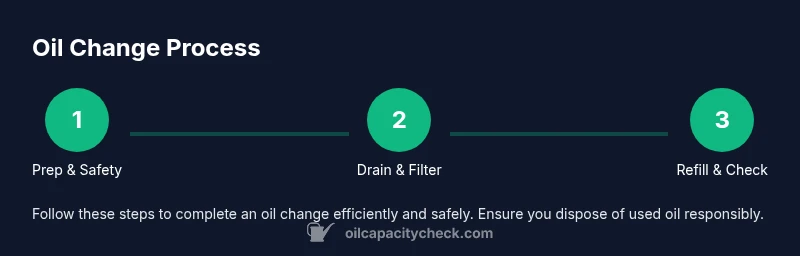
The following steps are designed to be clear and repeatable: prep the car and workspace, locate the drain plug and oil filter, drain the old oil, replace the filter, refill with new oil, check the level, and dispose of waste oil. Each action minimizes mess and ensures you capture all old oil in a drain pan. Understanding the rationale behind each step helps you work faster, safer, and with less waste.
Disposal and environmental responsibility
Used motor oil is hazardous and must be disposed of properly. Take your used oil and filter to an authorized collection site or recycling center. Never pour old oil down the drain or onto the ground. If you’re planning multiple oil changes, keep a dedicated sealed container for used oil to prevent spills. After disposal, wipe the area clean and wash hands thoroughly. Proper disposal protects waterways and wildlife, and supports local recycling programs highlighted by Oil Capacity Check.
Common mistakes and how to avoid them
Avoid overfilling the engine, which can lead to foaming and pressure buildup. Don’t mix different oil viscosities or brands in the same fill. Skipping the oil filter change can leave particulates circulating in the engine. Don’t rush the drain or fails to torque the drain plug; over-tightening can strip the threads. Finally, never disregard your manual’s oil change interval—deviations can affect warranty and engine life.
Maintenance beyond the oil change
Oil changes are a cornerstone of vehicle maintenance, but they fit into a broader schedule: routine oil level checks between changes, air filter inspection, coolant levels, and belt/tension checks. Address any leaks promptly and note service intervals in a maintenance log. A proactive approach reduces the risk of unexpected breakdowns and keeps your vehicle performing at its best. Oil Capacity Check encourages drivers to pair oil changes with filter replacements for optimal protection.
AUTHORITY SOURCES
For further reading and verification, consult trusted sources: EPA on used oil disposal and recycling (https://www.epa.gov/hw/used-oil) and major automotive publications that discuss best practices for maintenance intervals and lubrication. The National Highway Traffic Safety Administration also offers guidance on vehicle maintenance safety (https://www.nhtsa.gov/road-safety). These references help you understand why proper oil changes matter, how to select the correct oil grade and capacity, and how to dispose of oil responsibly to protect the environment.
Tools & Materials
- Owner's manual(For model-specific capacity and torque specs)
- New engine oil(Viscosity grade and quantity per manufacturer (e.g., 5W-30, 4-5 quarts))
- Oil filter(Replace with the correct part for your engine)
- Oil drain pan(Large enough to hold the capacity + catch drained oil)
- Funnel(To aid pouring and avoid spills)
- Wrench set(For drain plug and filter housing)
- Dipstick(To verify oil level after refilling)
- Car jack and jack stands(Only if you need to lift the car)
- Wheel chocks(Chock wheels opposite the work side)
- Gloves and rags(Keep hands clean and wipe spills)
- Safety glasses(Eye protection is recommended)
Steps
Estimated time: 40-60 minutes
- 1
Prepare the vehicle and workspace
Park on a level surface, engage the parking brake, and place wheel chocks behind the tires. If you must lift the car, use a jack and stands; never rely on a jack alone. This ensures stability and safety during oil drainage and filter removal.
Tip: Always chock wheels opposite the side you’ll work on and wear gloves. - 2
Locate drain plug and oil filter
Consult the owner’s manual to find the drain plug location and oil filter. Have the drain pan positioned beneath the drain plug before you loosen it to catch the hot oil.
Tip: Warm oil slightly by idling the engine for a few minutes if it’s safe to do so; this lowers viscosity and improves drainage. - 3
Drain the old oil
With the drain plug loosened, allow the oil to flow into the pan until it drips to a slow finish. Capture all fluids and avoid splashing by keeping the drain plug aligned as you remove it fully.
Tip: Be careful—oil can be extremely hot right after operation. - 4
Replace the oil filter
Remove the old filter and prepare the new filter by dabbing a bit of fresh oil on the gasket. Install snugly but avoid overtightening to prevent damage.
Tip: Make sure the gasket seats evenly; a loose seal causes leaks. - 5
Refill with new oil
Using a funnel, pour the manufacturer-recommended quantity of oil in stages. After filling, check the level with the dipstick and add small amounts as needed to reach the correct mark.
Tip: Pour slowly and recheck to avoid overfilling. - 6
Check for leaks and run the engine
Start the engine and let it run a minute while checking around the drain plug and filter for leaks. Turn off, wait a few minutes, and recheck the dipstick.
Tip: If you see a leak, stop the engine and tighten the drain plug or filter as needed. - 7
Dispose of used oil properly
Place used oil and filters in approved containers and take them to an authorized recycling center. Do not pour oil down the drain or onto the ground.
Tip: Relabel the container and keep it upright during transport.
People Also Ask
How often should you change the oil in most cars?
Most cars require an oil change every 3,000-5,000 miles for conventional oil or up to 7,500-10,000 miles for many synthetics; always follow your owner's manual.
Most cars need an oil change roughly every 3,000 to 5,000 miles with conventional oil, or 7,500 to 10,000 miles for many synthetics. Check your manual for specifics.
Can I reuse old oil after draining it?
Used oil should not be reused. It loses protective properties and can contain contaminants. Recycle it or dispose of it properly.
No—used oil isn’t reusable. Recycle it properly and don’t pour it down the drain.
Is it necessary to warm the engine before draining?
Warming the engine slightly helps the oil drain faster and more completely, but allow the engine to cool enough to handle safely.
A brief warm-up helps drain quicker, but protect yourself from hot components.
Do I need to replace the oil filter every time?
Yes. Replacing the oil filter ensures particulates don’t circulate with new oil and helps maintain proper lubrication.
Yes—change the filter with every oil change for best protection.
What if I overfill the oil?
Overfilling can cause foaming and engine damage. Drain a small amount or consult the manual for the proper procedure to reduce levels.
If you overfill, remove some oil according to the manual or seek professional help.
Where can I dispose of used oil?
Take used oil to an authorized recycling center, auto parts store, or service facility. They’ll handle it safely and legally.
Take used oil to an approved recycling center or auto shop.
Can I change oil without jacking up the car?
In many vehicles you can access the drain plug from ground level, but some models require lifting. Refer to the manual and use proper safety equipment.
Some cars let you drain from the ground; others need a lift. Check your manual.
Watch Video
The Essentials
- Verify the correct oil grade and capacity before starting.
- Replace the oil filter at every change to protect engine internals.
- Dispose of used oil responsibly and recycle filters.
- Keep a maintenance log to track service history.