How is Oil Change at Valvoline: An Analytical Review
A thorough, balanced review of Valvoline oil change services, detailing the process, value, time, and how it stacks up against DIY. Learn what to expect, how to prepare, and how to assess quality.


According to Oil Capacity Check, Valvoline Instant Oil Change delivers a fast, standardized service with clear oil-grade options and routine vehicle inspections. This quick verdict highlights the core steps, time efficiency, and perceived value, and how the experience compares to a DIY oil change. We assess process clarity, technician communication, and any upsell opportunities.
Overview of Valvoline Oil Change Service
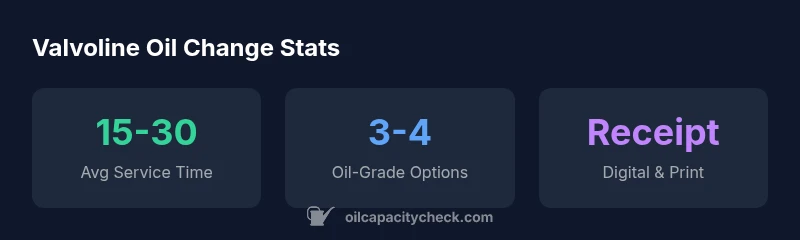
Valvoline Instant Oil Change (VIOC) is designed for speed and reliability, offering a streamlined oil-change workflow that emphasizes clear oil-grade options and basic under-hood checks. The core service typically includes draining the old oil, replacing the filter, refilling with the manufacturer-recommended grade, and performing a quick inspection of fluids, tires, belts, and visible leaks. For many drivers, the service is a convenient solution when time is precious and you want a professional job without a full-service shop visit. Across most locations, the process is standardized to minimize variability, with trained technicians following a scripted sequence to ensure consistency. Premium oils, synthetic blends, and full synthetic options are available, allowing customers to tailor the service to their engine’s needs. Valvoline also offers digital receipts and maintenance reminders to help track service history. While price varies by location and oil choice, the fundamental steps remain recognizable, making it easier to compare with DIY changes and other quick-lube providers. This section sets the stage for understanding what you get from a Valvoline oil change.
How Valvoline Implements the Service
Valvoline’s process starts the moment you arrive, with an intake that records vehicle details and preferred oil grade. Technicians then position the vehicle on a dedicated oil-change bay and proceed with draining the old oil into a sealed container, replacing the oil filter, and checking for leaks or signs of wear. After draining, they refill with the chosen oil type—conventional, synthetic-blend, or full synthetic—aiming to reach the correct engine level using a dipstick or electronic sensor. The service typically includes a quick inspection of fluids, tire pressure, belts, and the battery area, along with a dash-light check to catch potential issues early. Receipts detail the oil grade, quantity, and recommended next service interval, offering a tangible maintenance history. In many centers, technicians may also present optional add-ons like fuel-system cleaners or coolant checks, clearly labeled with price ranges for better decision-making. This section explains how the service is executed step-by-step from arrival to receipt.
Speed and Consistency: What You Gain
A major advantage of Valvoline’s model is speed. The standardized workflow reduces variability, enabling technicians to complete the core oil-change task quickly while maintaining quality checks. Customers benefit from predictable turnaround times and the reassurance of a certified quick-lube environment. The service format also supports consistent documentation, with clear records of the oil grade used and the service date. However, the speed can come with trade-offs: limited time for in-depth diagnostics beyond standard checks, and fewer opportunities to address unusual engine configurations or unique manufacturer recommendations. The result is a reliable, repeatable experience that prioritizes core maintenance over bespoke troubleshooting. For drivers on tight schedules, this predictability is a strong value, especially when paired with transparent, itemized receipts.
Potential Downsides: Upsells, Pricing, and Variability
No service is without trade-offs. Valvoline centers may present upsell options such as fuel-system cleaners, coolant tops, or additional inspections. While these add-ons can be beneficial for some vehicles, they can also inflate the final bill and complicate the comparison with DIY options. Pricing tends to vary by location and oil choice, making it important for customers to ask for a clear, itemized quote before confirming the service. Another potential downside is location-to-location variability: equipment, technician experience, and crowds can influence wait times and perceived quality. Reading the service note and keeping a copy of the receipt can help you track performance across visits and locations. This section helps readers weigh speed and convenience against potential upsells and cost considerations.
DIY Oil Change vs Valvoline: A Practical Guide
Choosing between a do-it-yourself oil change and a Valvoline service hinges on several factors. If your vehicle has a straightforward specification and you have the right tools, a DIY change can be cheaper and educational. However, the Valvoline model offers speed, convenience, and a professional check of critical systems that many drivers may underappreciate when doing it at home. For those with time constraints, limited space, or a preference for professional-grade documentation, VIOC can be a compelling option. This section lays out practical decision criteria, including tool availability, oil-grade expertise, and the value of quick-inspection services that can catch issues early.
Before You Go: Preparation Checklist
Preparation improves outcomes at any quick-lube, and Valvoline is no exception. Before your visit, confirm the recommended oil grade for your engine in the owner’s manual, bring any relevant maintenance history, and note any recent service concerns. Check for manufacturer recommendations on synthetic versus conventional oils and verify whether your vehicle requires a particular viscosity. If you possess a loyalty card or digital coupon, have it ready to scan at check-in. Finally, consider performing a quick exterior inspection to ensure there are no obvious leaks you want the technician to address during the service. This checklist helps you arrive informed and reduces the chance of unnecessary upsells or miscommunication.
Aftercare and Maintaining Engine Health
Post-service steps matter as much as the service itself. After the oil change, drivers should verify the oil level in the engine as soon as possible and on a level surface. If a dashboard light remains on or a leak appears, contact the center promptly. Keeping a maintenance log with dates, oil grades, and mileage is valuable for future service planning. Following the manufacturer’s timing or mileage recommendations for oil changes ensures optimal protection for your engine, while periodic checks of other fluids—coolant, brake fluid, and transmission fluid—help sustain reliability. This section emphasizes practical, repeatable steps you can take after a Valvoline oil change to maximize engine health over time.
Location Variability and What It Means for You
Valvoline centers across regions can differ in wait times, available oil grades, and the prevalence of upsell pitches. Some locations may emphasize rapid-change bragging rights, while others focus more on comprehensive inspections. When planning, it’s worth checking recent customer reviews for a local center and asking staff about current promotions, oil options, and any ongoing maintenance reminders. The takeaway is to choose a well-rated location and be explicit about your expectations to get the best possible value from your visit.
What's Good
- Fast service with a predictable workflow
- Clear oil-grade options aligned with manufacturer specs
- Professional documentation and receipts
- Standardized checks that help catch obvious issues
- Easy access to maintenance reminders and records
Cons
- Upsell opportunities can inflate the final cost
- Location variability affects wait times and service depth
- Limited time for deeper diagnostics on complex engines
- Not the cheapest option for budget DIYers
Valvoline Instant Oil Change offers a fast, predictable service for routine maintenance.
For busy drivers, the quick-lube format provides convenience and consistent checks. While upsells can raise the final price, the service covers core maintenance efficiently. The verdict is to consider location quality and specific oil needs when deciding between DIY and professional service.
People Also Ask
What is Valvoline Instant Oil Change (VIOC)?
Valvoline Instant Oil Change is a fast-service option that drains old oil, changes the filter, and tops up with the selected oil grade, followed by a quick systems check. It emphasizes speed and consistent performance across locations.
Valvoline Instant Oil Change is a quick service for oil changes with a standardized process and fast turnaround.
How long does an oil change take at Valvoline?
Most visits are completed in a short time window, typically fitting around a busy schedule. Exact duration depends on location, vehicle, and the presence of any add-ons.
Most visits run quickly, depending on your car and added services.
Do they offer synthetic oil and how does the cost compare to DIY?
Valvoline offers conventional, synthetic-blend, and full synthetic oils. While higher in upfront cost than a DIY change, you receive professional installation, disposal, and documented maintenance, which adds value for many drivers.
Yes, they offer synthetic options; the service includes professional installation and a maintenance record.
Can I have other maintenance performed during the oil change?
Many centers offer add-ons like fuel-system cleaners or coolant checks. Availability varies by location, and these should be requested upfront with a clear quote.
Add-ons may be available; ask for a price before approving.
Will Valvoline check tires, brakes, and other fluids during the oil change?
Yes, a quick inspection often includes tire pressure, fluid levels, and visible leaks. It’s not a full diagnostic, but it helps flag obvious issues for follow-up.
Expect a quick check of tires and fluids, not a full diagnostic.
Is it worth combining Valvoline with a loyalty program or coupons?
Loyalty programs and occasional coupons can provide meaningful savings. Always confirm the final price after any discounts to avoid surprises at checkout.
Coupons can save you money, but always confirm the final price first.
The Essentials
- Opt for Valvoline when time is a priority and you want a documented service history.
- Ask for a clear, itemized quote before agreeing to add-ons.
- Know your engine’s oil grade requirements to avoid unnecessary upsells.
- Verify the oil level after the change to confirm correct fill.
- Compare local centers to find the best balance of price and service depth.