Can an Oil Change Cause Car Shake? A Troubleshooting Guide
Urgent troubleshooting guide: does an oil change cause shaking, and how to diagnose quickly. Step-by-step checks, diagnostic flow, and professional tips from Oil Capacity Check.


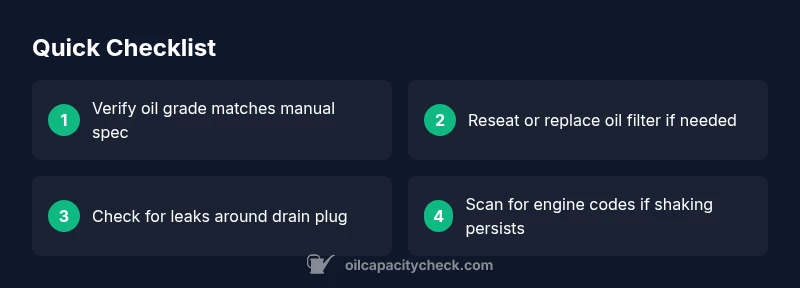
Shaking after an oil change is rarely caused by the oil itself. The most likely culprits are an improperly installed or mismatched oil filter, an incorrect oil viscosity for your engine, or unrelated issues such as a vacuum leak or a misfire. Start by confirming the oil grade, reseating the filter, and scanning for engine codes. If anything seems off, stop driving and inspect further.
Can shaking after an oil change happen? A reality check
Shaking or rough idling right after an oil change is not a typical consequence of changing engine oil. The oil is a lubricant; it doesn't directly alter engine vibration during normal operation. In many cases, the symptom stems from maintenance-related mistakes or from issues that are unrelated to the oil change itself. According to Oil Capacity Check, start by verifying the oil grade, ensuring the filter is seated correctly, and checking for leaks or other engine health indicators. A careful check helps you avoid unnecessary repairs and unsafe driving. If you notice a persistent shake, document when it occurs (idle, acceleration, speed) to aid a technician. The goal is to separate symptoms caused by the oil change from independent engine health problems.
Can shaking after an oil change happen? A reality check
Shaking or rough idling right after an oil change is not a typical consequence of changing engine oil. The oil is a lubricant; it doesn't directly alter engine vibration during normal operation. In many cases, the symptom stems from maintenance-related mistakes or from issues that are unrelated to the oil change itself. According to Oil Capacity Check, start by verifying the oil grade, ensuring the filter is seated correctly, and checking for leaks or other engine health indicators. A careful check helps you avoid unnecessary repairs and unsafe driving. If you notice a persistent shake, document when it occurs (idle, acceleration, speed) to aid a technician. The goal is to separate symptoms caused by the oil change from independent engine health problems.
Steps
Estimated time: 45-60 minutes
- 1
Verify oil grade and quantity
Turn off the engine and let it sit on level ground. Confirm the oil grade and compatibility with your engine as stated in the owner’s manual. Check the dipstick for proper level and look for signs of underfill or overfill. If the grade is wrong or the level is off, drain and replace with the correct oil.
Tip: Always use fresh oil in the recommended viscosity range. - 2
Inspect oil filter seating and condition
Remove the filter carefully and inspect the gasket for damage or misalignment. Reinstall with a new gasket if needed and ensure it sits evenly without cross-threading. Start the engine and check for leaks around the filter area.
Tip: Lightly oil the gasket with a dab of new oil to help seal. - 3
Look for leaks and secure fittings
Examine the drain plug, filter housing, and nearby hoses for any fresh oil leaks. Tighten fittings to the correct torque as specified in the service manual, but avoid over-tightening the drain plug.
Tip: Place clean paper under the area after a short warm start to catch drips. - 4
Check PCV valve and vacuum lines
Inspect the PCV valve for sticking or clogging and check all vacuum hoses for cracks or disconnections. A faulty PCV system can cause rough idle and vibrations.
Tip: Replace a degraded PCV valve rather than cleaning it if it’s stuck. - 5
Run engine and scan for codes
With a basic OBD-II reader, scan for misfire, fuel, or air intake codes. Note any trouble codes and clear them after repairs to verify the fix.
Tip: Record codes before resetting so you can confirm resolution later. - 6
Assess engine mounts and tires
Physically check for cracked or worn engine mounts; listen for clunks during acceleration. Check tire balance and inspect tires for irregular wear or damage.
Tip: If you suspect mounts or tires, consult a professional for precise diagnosis.
Diagnosis: Car shakes or rough idle after an oil change
Possible Causes
- mediumOil viscosity mismatch or incorrect grade
- highImproperly installed or damaged oil filter
- mediumVacuum leak or PCV valve issue
- lowEngine misfire from ignition/fuel system
- lowWorn engine mounts or suspension components
Fixes
- easyVerify oil grade and quantity with the owner's manual; correct if needed
- easyRemove and reseat the oil filter; replace if damaged
- easyInspect PCV valve and vacuum hoses for cracks or leaks; replace as needed
- mediumRun an OBD-II scan to identify misfire or fuel issues; address codes accordingly
- hardInspect engine mounts and tires for wear or imbalance; replace/repair if needed
People Also Ask
Can a bad oil change really cause my car to shake?
Usually not. Shaking commonly points to installation issues or unrelated engine problems rather than the oil itself. Many times it’s a mis-seated filter, wrong oil grade, or a misfire that coincides with an oil change.
Usually not. Shaking after an oil change is more often related to installation or other engine issues.
What are the first signs that the shake isn’t from the oil change?
Look for oil leaks, unusual engine noise, or warning lights. If the shake occurs at idle or at specific RPM ranges, note when it happens and whether it improves with throttle input.
Leaks, strange noises, or a warning light are red flags that point to engine health beyond the oil change.
How do I tell if a misfire is from ignition or fuel system?
Check for trouble codes related to ignition or fuel. Inspect spark plugs, coils, and fuel injectors. A professional diagnosis may be needed if codes persist.
Check codes and inspect ignition parts; persistent codes may require a professional test.
Should I drive to a shop if the shaking continues?
If the shake is severe or accompanied by other symptoms (noise, smoke, loss of power), stop driving and seek help. A professional inspection is advised before continuing.
If it’s severe or unsafe, stop and get help; otherwise schedule a diagnostic soon.
Are engine mounts a common cause of shaking?
Yes. Worn or damaged engine mounts can cause noticeable vibration, especially at idle or during acceleration. They’re often overlooked after maintenance.
Worn mounts can cause vibration and should be checked if other causes are ruled out.
Can a clogged air filter cause engine shake?
A severely clogged air filter can affect engine performance, but it’s a less common cause of shaking. Check air intake and clean or replace if needed.
A dirty air filter is less likely, but worth inspecting if other causes aren’t found.
Watch Video
The Essentials
- Verify oil grade and quantity first.
- Inspect the filter seating and look for leaks.
- Run a diagnostics scan for misfire or fuel issues.
- Don’t ignore engine mounts or tire balance.
- Seek professional help if the shake persists.