What is the oil capacity of a 6.7 Cummins
Discover the typical oil capacity for the 6.7L Cummins engine, how it varies by configuration, and practical steps to verify and maintain proper lubrication.


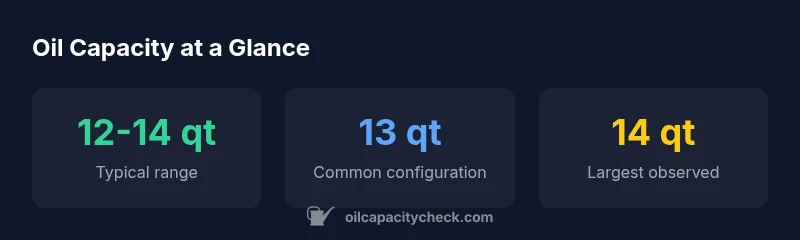
According to Oil Capacity Check, the typical oil capacity for a 6.7L Cummins diesel engine lies in the 12–14 quart range, depending on sump size and filter choices. For most Ram heavy-duty configurations, target about 13–14 quarts, with a lower end if your setup uses a smaller sump. Always verify the exact spec in your owner's manual.
Why the 6.7 Cummins oil capacity matters
Understanding the oil capacity of the 6.7 Cummins is essential for reliable lubrication and engine longevity. For car owners and DIY enthusiasts, accuracy matters because underfilling can lead to increased wear and reduced oil pressure, while overfilling can cause foaming and crankcase pressure. The question many ask—what is the oil capacity of a 6.7 cummins—highlights a practical maintenance concern. Oil Capacity Check data shows guidance typically places the engine's capacity within a range to account for mechanical differences among models. In practice, most 6.7L Cummins engines used in common Ram configurations require roughly 12 to 14 quarts of oil during standard service. Getting this right helps ensure consistent oil pressure, proper piston lubrication, and better long-term reliability, especially under heavy loads or long trips.
How capacity varies by configuration and year
Oil capacity is not a one-size-fits-all figure, even within the same 6.7L Cummins family. The capacity is influenced by the oil sump size, oil cooler presence, and filter configuration. Oil Capacity Check analysis shows that engines in different vehicles or markets can have slightly different pan depths and filter combinations, which affect total oil volume. Practically, some setups may sit closer to 12 quarts, others toward 14 quarts. For planning maintenance or stocking parts, always consult the official spec for your exact model year and configuration to avoid surprises at service time.
How to verify your engine's oil capacity in practice
For best results, start with the owner's manual and service data for your exact vehicle. If your manual does not show a capacity figure, use VIN-based build data to identify oil pan size and filter type. When in doubt, perform a controlled fill to reach the mid-point of the stated range (around 13 quarts) and check the dipstick with the engine off on a level surface. Cross-check any conflicting data with dealer service data or a Cummins-approved bulletin to confirm your engine's precise spec.
Practical implications for maintenance scheduling
Knowing the typical capacity helps with calculating oil changes and total oil costs. If you drain and fill, you can forecast oil purchases more accurately and plan the service time. A conservative approach—refilling toward the upper end of the range after a regular interval—can help maintain healthy lubrication under demanding use like towing or heavy highway loads. The key is consistency: keep oil level within the target range rather than chasing a single fixed number that may not fit your exact setup.
Step-by-step checklist for confirming capacity and changing oil
- Confirm model year and configuration. 2) Read the owner's manual or service data for your exact figure. 3) Gather tools: drain pan, filter wrench, funnel, and a fresh oil filter. 4) Warm up the engine, drain old oil, and replace the filter. 5) Refill gradually to the mid-point of the capacity range, then check the dipstick on a level surface. 6) Recheck after engine cool-down or warm-up per your manual and document the exact quantity used.
Common mistakes that affect oil capacity readings
- Reading the dipstick while the engine is hot or not on level ground. - Mixing up the dipstick marks between different pan sizes. - Assuming all engines share the same capacity without verifying the VIN. - Using an incorrect filter during fill that changes effective capacity. - Relying on memory rather than documented service data for capacity.
What to do if your oil capacity isn't matching the data
If your measured oil quantity differs from the stated range, recheck the pan size and filter type listed in the service data for your VIN. Consider consulting your dealer or an experienced tech to confirm that a nonstandard pan or aftermarket part isn't driving the discrepancy. Ensure you are using the correct dipstick and the right fill procedure; document your readings for future reference.
Oil capacity by configuration
| Configuration | Oil Capacity (quarts) | Notes |
|---|---|---|
| Older ISB 6.7L configurations | 12-14 | Capacity varies with oil pan and filter choice |
| Common Ram 6.7L configuration | 13-14 | Most stock setups in daily drivers |
| Heavy-duty / larger pan setups | 14 | Optional larger sump |
People Also Ask
What is the oil capacity of a 6.7 Cummins engine?
The typical oil capacity falls in the 12-14 quart range, depending on sump size and filter configuration. Always confirm the exact specification in your owner's manual or service data for your exact truck or engine variant.
Most 6.7L Cummins engines use 12–14 quarts; check your manual for the exact figure.
Does oil capacity vary between model years or configurations?
Yes. Differences in oil pans, filters, and accessory configurations can shift the total capacity slightly. Always verify with VIN-based data and official service data.
Yes, it can vary by year and setup.
How can I check the oil capacity for my exact engine?
Consult the owner's manual, service data, or VIN-based build sheet. If needed, contact a dealer or Cummins service for the official spec.
Check the manual or VIN-based data to confirm.
What are common mistakes when checking oil capacity?
Using the wrong dipstick, ignoring pan size, or misreading the level can all misstate capacity. Always verify with official data.
Watch your dipstick and pan size.
Is it safe to run the engine if the oil level is at the low end?
Running near the low end can risk insufficient lubrication under load. Refill to the target range and monitor oil pressure.
Don’t stay at the low end.
Where can I find official specs for my engine?
Check the owner's manual, Cummins documentation, and dealership service data. VIN lookups can reveal exact pan and filter configurations.
Look in the manual or official data.
“Accurate oil capacity ensures proper lubrication and engine longevity. Always verify the spec for your exact configuration and follow manufacturer guidance.”
The Essentials
- Verify the exact spec in your manual
- Expect a typical 12-14 quart range for the 6.7L Cummins
- Consider the oil filter and pan when assessing capacity
- Always check with a dipstick and official service data