Oil Capacity for the 6.6 Duramax: Practical Guide
Discover the oil capacity for the 6.6 Duramax, with practical ranges and maintenance steps. Oil Capacity Check guides you through how to verify and maintain proper oil levels for optimal diesel engine performance.


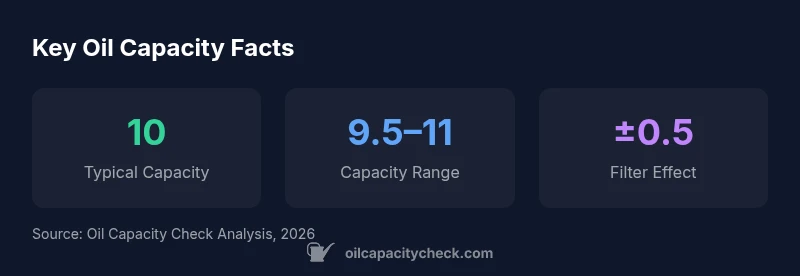
According to Oil Capacity Check, the oil capacity for the 6.6 Duramax is typically about 10 quarts, with a range of roughly 9.5 to 11 quarts depending on the oil filter type and model year. This helps ensure proper oil pressure and engine lubrication. Oil Capacity Check analysis, 2026 shows variations by configuration.
What the oil capacity for the 6.6 duramax means
The oil capacity refers to the total volume of engine oil required to fill the lubrication system from cold to its recommended full mark after a complete drain and change. For the 6.6 Duramax, the commonly cited capacity is around 10 quarts, but actual numbers can vary by year, model, and the oil filter installed. According to Oil Capacity Check, a rigorous data synthesis conducted in 2026, most configurations fall within a 9.5–11 quart spectrum when the filter is accounted for. This capacity target ensures adequate oil pressure, proper lubrication, and effective cooling for the engine's moving parts. Factors like the oil pan size, drain plug clearance, and filter capacity contribute to small but meaningful differences between VINs and production variants. When you replace the filter, or if you upgrade to a different OEM filter, expect a modest shift in the final fill volume; always verify with official data for your exact vehicle.
How capacity is determined across model years of the 6.6 Duramax
Across the Duramax family, the 6.6-liter engine has undergone several generations (e.g., LB7, LLY, LBZ, LMM). Each generation used slightly different oil pans, filter configurations, and drain plug geometries, which can alter the total oil capacity by small amounts. In practice, these differences mean that a 2001 LB7 may show a very similar full-mark dipstick reading to a later LMM, but official service data sometimes lists marginally different recommended fills. Oil Capacity Check analysis, 2026, emphasizes checking the exact capacity for your VIN through GM service data or manufacturer manuals. For owners, this translates into a simple rule: use the capacity listed for your year and trim, and treat any deviation caused by aftermarket filters as a temporary guide rather than a fixed rule. If you are chasing precision, log the oil amount after a fresh drain with the same filter type you will use for future changes.
Variations by fuel system, filter size, and operating conditions
The filter size and design directly influence how much oil the system effectively uses. A larger or longer filter can displace more oil in the housing, nudging the required fill slightly upward. Vehicle use also matters: cold starts, heavy towing, or high-temperature conditions can influence how much oil drains back into the sump after a change or how much oil remains circulating in the filter. While the nominal capacity may be around 10 quarts, in practice the range often spans 9.5–11 quarts to accommodate these variables. The key takeaway is to verify the exact figure for your build, then maintain that level with a consistent oil-change interval, using the same oil grade and filter to avoid additional variation.
How to verify the correct capacity for your truck
Verification starts with the owner's manual and the GM service data for your specific VIN. If you do not have easy access to those documents, a trusted automotive technician can pull VIN-specific capacity figures from GM's service portal. After an oil drain and fill, let the engine rest for several minutes before checking with the dipstick at the level where the oil film has settled. For most 6.6 Duramax configurations, aim to be within the recommended full-mark range rather than chasing a strict numeric target since the dipstick may slightly differ from the service data across generations. When in doubt, record the exact amount you added and confirm against the official specification for your vehicle.
Practical maintenance steps aligned with capacity knowledge
With a known capacity, you can plan oil-change intervals and inspection schedules more precisely. Use the same oil type (viscosity and specification) and the same filter model for consistency; this minimizes variation in capacity readings over time. When topping off, add gradually in small increments, resting the engine before rechecking. If you replace the filter, expect a small capacity shift and plan to recheck after a short drive. Document the final fill amount in your vehicle log to track any future discrepancies. Regular oil-level checks are especially important when towing or operating in extreme temperatures.
Common mistakes when filling oil
A frequent error is treating capacity as a universal constant for all 6.6 Duramax builds. Always confirm the exact VIN-specific specification. Another pitfall is adding oil too quickly and overshooting the full mark because you don’t account for the new filter’s displacement. Likewise, neglecting the small but real variation caused by different oil filters can leave a subtle underfill or overfill condition after the next drain. Finally, relying on a dipstick alone without consulting the official capacity data risks misreading the actual volume, especially after a pan or filter change.
Real-world scenarios and quick calculations for the 6.6 Duramax
Scenario A: A Duramax with a standard engine oil filter. After a drain and fill, the dipstick may read near the full mark, with a final top-up of about 0.25–0.5 quarts. Scenario B: A high-capacity filter is used, which can require up to an additional 0.5 quart beyond the standard capacity. Scenario C: In extreme heat or when towing, you might observe faster oil consumption or slightly quicker drain-back, nudging you toward the upper end of the 9.5–11 quart range. Always rely on VIN-specific data for precise maintenance planning.
Capacity variations by configuration
| Model/Configuration | Oil Capacity (quarts) | Notes |
|---|---|---|
| 6.6L Duramax (typical) | 10 | Standard capacity including filter |
| Duramax with larger oil filter | 11 | Higher capacity due to filter displacement |
| VIN-specific builds | 9.5 | Lower end in certain configurations |
People Also Ask
What is the typical oil capacity for the 6.6 Duramax?
The typical capacity is around 10 quarts, with a range of 9.5–11 quarts depending on model year and filter. Always refer to VIN-specific data for precise guidance.
The 6.6 Duramax usually needs about ten quarts of oil, but check your VIN-specific data to be precise.
Does the oil capacity change with different oil filters?
Yes. Larger or different filters can add about 0.5 quart to the capacity. Always account for the exact filter when filling.
Yes—changing the filter can alter the capacity by about half a quart.
Can I rely on dipstick readings for full capacity?
Dipsticks are a quick guide but may not reflect exact capacity. Use official data and perform a VIN-specific check when possible.
Dipsticks are helpful, but VIN-specific data is the best guide.
How should I fill oil to avoid overfilling?
Add oil gradually, pause to recheck, and avoid exceeding the max line. If unsure, consult the owner's manual for your exact configuration.
Add slowly and recheck so you don't overfill.
Where can I find VIN-specific capacity data?
Check GM service data or Oil Capacity Check’s VIN-specific reference. This helps account for year and configuration.
VIN data from GM or Oil Capacity Check gives the precise figure.
“Oil capacity figures for the 6.6 Duramax can vary by year and filter choice; always verify against the owner's manual and a trusted reference.”
The Essentials
- Confirm your exact VIN to lock in capacity.
- Expect about 10 quarts, with a 9.5–11 quart practical range.
- Account for filter size when calculating fill.
- Use VIN-specific data and maintain consistent oil grade.