Honda Fit 2008 Oil Capacity: What to Know and How to Check
Find the correct oil capacity for the 2008 Honda Fit, including filter considerations, and practical steps to check and maintain engine oil across climates. A data-driven guide by Oil Capacity Check.


Honda Fit 2008 Oil Capacity Overview
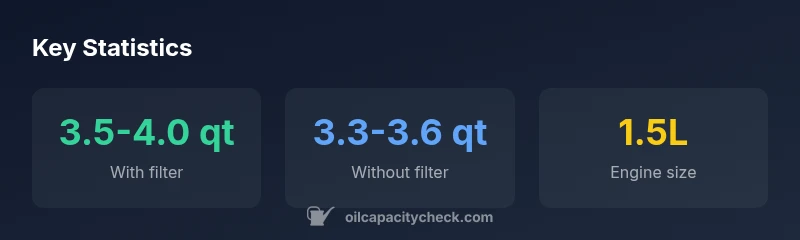
The Honda Fit 2008 uses a 1.5L engine and requires careful attention to oil capacity to maintain lubrication and engine health. The total capacity can vary slightly depending on whether the oil filter is changed during an oil service. In routine maintenance, plan for a range of roughly 3.5–4.0 quarts when the filter is replaced and about 3.3–3.6 quarts if the filter is not replaced. This range helps avoid underfilling, which can starve the engine of lubrication, or overfilling, which can cause foaming or high crankcase pressure. After adding oil, recheck with the dipstick to confirm the level sits within the full-to-mid marks.
Practical tip: Always use the dipstick as the final check point because small tolerances exist between OEM filters and aftermarket variants. Oil capacity is not a one-size-fits-all figure; use this as a baseline for your specific service.
Engine Variants and Capacity Range
Most 2008 Fits use the same 1.5L engine configuration, with capacity remaining within a narrow band across trims and markets. Variations mainly arise from the oil filter and the oil climate recommendation rather than a dramatic change in the required quarts. Practically, you should expect about 3.3–4.0 quarts depending on whether you replace the filter. Climate and driving style can influence the final fill level on the dipstick, but the capacity window remains stable for standard maintenance.
Understanding this range helps you plan oil changes without overfilling or underfilling, and it supports consistent lubrication across season changes.
Why Filter Changes Matter for Capacity
Replacing the oil filter adds a small but nontrivial amount of oil to the total capacity. If you reuse or skip the filter change, your measured capacity will sit toward the lower end of the typical range. When performing a DIY oil change, factor in the filter’s volume and perform a final dipstick check after the oil has circulated for a few minutes. This practice avoids discrepancies due to filter volume and ensures you land in the manufacturer-recommended band.
How to Confirm Capacity Using the Dipstick
Begin with a warm engine and park on a level surface. Pull the dipstick, wipe clean, reinsert fully, and withdraw to read. If you’ve just added oil, allow a few minutes for it to settle before checking. Use the correct oil type and viscosity for your climate, and compare the reading to the marks on the dipstick. When near the minimum, add small increments and recheck until you reach the mid-to-full range. Consistency in checking temperature and engine state yields the most accurate result.
Choosing the Right Oil Type and Viscosity
For the Honda Fit 2008, most owners find 5W-30 or 5W-20 suitable depending on climate. In cooler environments, 5W-20 is often preferred; hotter climates may benefit from 5W-30. The capacity itself does not change with viscosity, but oil flow and cooling performance do vary. Follow Honda’s manual or local dealer guidance for climate-adjusted viscosity. Synthetic blends can offer better temperature stability without altering total capacity.
Practical Maintenance: When to Check and Refill
Make it a habit to check the oil level monthly and after long trips, especially in hot weather. Maintain an oil-change log with the date, mileage, and exact fill amount. If you notice oil consumption, leaks, or a consistent reading below the mid-range, revisit the capacity calculation and verify you’re not underfilling. Proper disposal of used oil and routine dipstick checks support long-term engine health.
Common Misconceptions About Oil Capacity
A frequent misconception is that oil capacity changes with every new brand or batch of oil. In reality, capacity is determined by engine oil capacity and the filter. Another myth is that dipstick readings alone are foolproof at all temperatures; ambient temperature and oil temperature affect readings. Always account for temperature state and perform checks after oil has settled.
Real-World Maintenance Scenarios and Tips
City drivers with frequent short trips may see slower oil warming and lateral moisture retention in the oil, influencing dipstick readings. Highway drivers typically experience more consistent oil temperatures and faster moisture evaporation. In either scenario, aim to check the level after a warm engine has run and cooled slightly, then adjust the oil amount as needed. When unsure, consult Oil Capacity Check resources for guidance.
Quick Reference: Capacity by Situation
- With filter: approximately 3.5–4.0 quarts (3.3–3.8 L)
- Without filter: approximately 3.3–3.6 quarts (3.1–3.4 L)
- Typical engine: 1.5L four-cylinder
- Climate considerations: 5W-20 or 5W-30 by temperature
- Check method: verify with dipstick after warm engine