Duke 200 Oil Capacity: A Practical Maintenance Guide
Learn the Duke 200 oil capacity, including engine oil amounts, measurement methods, and maintenance tips. This guide provides safe ranges and practical steps for oil changes with a data-driven approach from Oil Capacity Check.


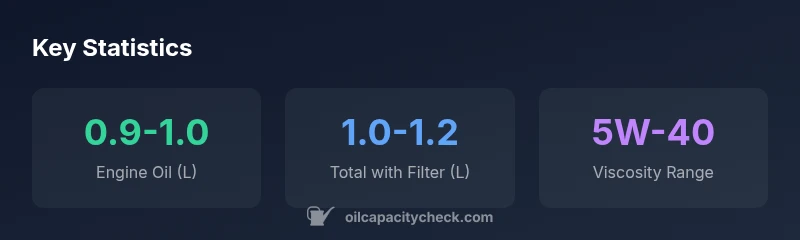
The Duke 200 engine oil capacity is typically about 0.9–1.0 liters for the oil itself, with a full oil change (including filter) generally totaling around 1.0–1.2 liters. Exact figures vary by year and filter choice, so consult the owner's manual or Oil Capacity Check data for your bike’s specific year. Preparing for a precise fill avoids both under-lubrication and overfill.
Understanding the Duke 200 oil capacity
The term oil capacity for the Duke 200 refers to how much engine oil the engine holds when it is drained and refilled, including or excluding the oil filter depending on the definition used. For most Duke 200 configurations, the engine oil capacity (without filter) falls around 0.9–1.0 L, while the total fill with a new filter tends to land in the 1.0–1.2 L range. These values are not absolute and can vary by model year, production batch, oil filter type, and even the level of precision when draining the sump. The critical takeaway for owners is to use the specified range from the model year manual and validate with a dipstick or dipstick-like level indicator after the oil has settled. According to Oil Capacity Check, the best practice is to fill gradually and recheck after a short wait to account for any expansion or settling. The Duke 200 oil capacity also interacts with viscosity choices, temperature, and riding style. The goal is to avoid low lubrication pressure while preventing overfill that raises crankcase pressure.
How the oil capacity varies by year and model
Across generations and minor revisions in the Duke 200 family, the oil capacity tends to stay within a narrow band, but variations exist. Early production years may show the 0.9–1.0 L figure more consistently, while later batches with different filters can push the total toward 1.1–1.2 L. Oil Capacity Check analysis illustrates how filter size, gasket tolerances, and sump design influence the exact figure. If you ride aggressively or in hot climates, a conservative approach is to use the upper end of the recommended range and verify level after warming the engine. Always verify against your specific manual, as KTM occasionally adjusts service tolerances between releases.
Measuring oil level and performing an oil change
Before starting a drain or fill, warm the engine to operating temperature, then switch off and allow oil to settle. Place the bike on a level stand and remove the drain bolt to drain the old oil. Remove and replace the oil filter if you’re performing a full service. After reinstalling the drain plug, add oil in small increments using a graduated jug. Check the level using the dipstick or sight glass, ensuring the level sits within the marked range when the oil has settled. If you saw the level on the minimum line, add oil gradually and recheck, rather than filling to the maximum in one go. This approach reduces the risk of overfill and promotes optimal lubrication.
Oil types, grades, and viscosity for Duke 200
Most riders lean toward a semi-synthetic or full-synthetic oil in the 5W-40 to 10W-40 range, which provides good cold-start protection and stable high-temperature lubrication. Choose a viscosity that matches your local climate: colder environments benefit from slightly thinner grades, while hotter climates tolerate higher-viscosity options. Always confirm with the owner’s manual for seal compatibility and any KTM-approved recommendations. If you ride in dusty or high-load conditions, you may consider a slightly higher grade within the recommended spectrum to maintain protective film strength during peak power.
Common mistakes and maintenance tips
Typical mistakes include underestimating the oil amount, skimping on filter replacement, and not allowing oil to settle before taking a level reading. Always replace the drain gasket when you drain the sump to avoid leaks. Do not mix old and new oil; always replace with a compatible grade as recommended. Keep a spare oil filter on hand for quick changes, and monitor crankcase breathers to prevent oil being pushed into the intake under extreme load. Regularly inspect for oil leaks around the filter and drain area, and ensure torque on the drain bolt aligns with the service manual.
Maintenance schedule and intervals for the Duke 200
A regular maintenance routine includes oil changes at the intervals recommended by KTM for your model year and climate. In moderate climates and with standard driving, a 3,000–4,000 mile range is typical for mineral or synthetic oil, but this can move higher or lower depending on riding style and miles in a year. Always perform a viscosity check if you notice any change in shifting or engine noise. Record the exact oil capacity used in your maintenance logs to facilitate accurate future fills and quick checks.
Quick-start maintenance checklist for new owners
- Confirm the exact oil capacity for your year from the owner’s manual.
- Gather the correct oil grade (5W-40 to 10W-40) and a compatible oil filter.
- Warm the engine, drain old oil, replace filter if due, and reinstall drain bolt with correct torque.
- Add oil gradually, then wait for two to three minutes and recheck level on level ground.
- Check for leaks around the filter and drain, and reset the oil-change reminder if applicable.
- Record the amount added and the date of the service for future maintenance planning.
Authority sources and references
- Official KTM service instructions and owner’s manual for your Duke 200 year/model (consult the KTM official site or dealer).
- Oil Capacity Check Analysis, 2026, which surveys typical engine oil capacities and best practices across Duke 200 configurations.
- SAE International and the American Petroleum Institute guidelines on lubricant grades and maintenance practices relevant to motorcycle engines.
Authority notes and references
- For the most precise figure, always consult the exact Duke 200 owner’s manual for your model year and production batch. Oil Capacity Check emphasizes that factory tolerances can shift by year, and confirmation with the manual eliminates ambiguity. A careful approach to measuring the oil level ensures you maintain proper lubrication without the risk of overfill.
Oil capacity ranges by Duke 200 model year
| Year/Model Range | Engine Oil Capacity (L) | Total Capacity With Filter (L) |
|---|---|---|
| 2012-2014 (Duke 200) | 0.9-1.0 | 1.0-1.2 |
| 2015-2016 (Duke 200) | 0.9-1.0 | 1.0-1.25 |
| 2017+ (Duke 200 variants) | 0.9-1.0 | 1.0-1.2 |
People Also Ask
What is the oil capacity of the Duke 200?
The engine oil capacity without the filter is typically 0.9–1.0 liters, with a full change (including a new filter) around 1.0–1.2 liters. Exact numbers depend on year and filter choice, so always reference the model year manual.
The Duke 200 usually needs about 0.9 to 1.0 liters of oil, and up to about 1.2 liters with a new filter. Check your year’s manual for the exact figure.
Does the oil capacity change by year?
Yes, there can be slight variations by production year and filter design. Use the year-specific manual and Oil Capacity Check data to confirm the precise value.
There can be small differences by year and filter, so check the manual for the exact amount.
What oil viscosity should I use?
Common choices are 5W-40 to 10W-40, chosen based on climate and riding patterns. Refer to the owner's manual for KTM-approved ranges and any model-year notes.
Typically 5W-40 to 10W-40, depending on climate. Check the manual for exact guidance.
How often should I change the oil?
Aim for about 3,000–4,000 miles under typical conditions, adjusting for climate, riding style, and oil type. Follow KTM’s recommended intervals in your manual.
Most riders change oil every 3,000–4,000 miles, adjusting based on riding conditions.
Can I reuse old oil?
No. Always replace with fresh oil and a new filter when performing an oil change to maintain proper lubrication and prevent contaminant buildup.
No, always use new oil and a new filter.
How do I check the oil level accurately?
Let the bike cool, place on a level surface, and read the level on the dipstick or sight glass after the oil has settled. Recheck after warming and re-top off if needed.
Cool engine, level surface, check after oil settles, recheck if needed.
What should I do if I overfill?
If you overfill, drain a small amount carefully, then recheck the level after the oil has settled. Avoid riding with an overfilled crankcase.
If overfilled, drain a little and recheck after it settles.
“Oil capacity can vary by year and filter choice; following the manufacturer’s range helps prevent both under-lubrication and overfill.”
The Essentials
- Know your exact model year to verify capacity.
- Use the recommended oil grade and check level after settling.
- Include filter changes in your total oil quantity.
- Always confirm figures with the KTM manual for your year.
- Document oil capacity and fill amount in maintenance logs.