2019 4Runner Oil Capacity: What to Expect and How to Check
Learn the official engine oil capacity for the 2019 Toyota 4Runner and how to verify it. This Oil Capacity Check guide covers typical ranges, filter impact, and best practices for accurate oil fills.


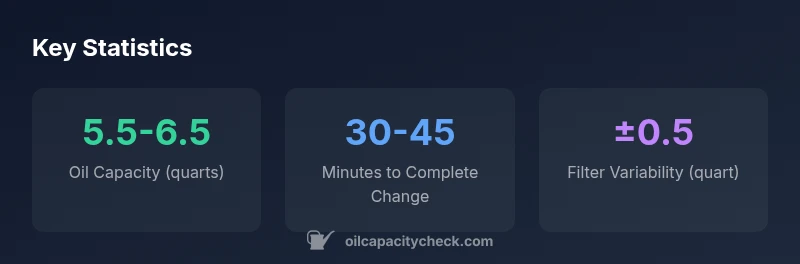
According to Oil Capacity Check, the 2019 4Runner with the 1GR-FE engine uses roughly 5.5-6.5 quarts of engine oil when the filter is changed. Most drivers fill toward 6 quarts and then verify the level with the dipstick after the engine has run and rested. Variations come from filter size and drain method.
Oil Capacity Basics for the 2019 4Runner
The 2019 4Runner uses a 1GR-FE V6 engine, a configuration common in this model line. The official capacity when changing the oil and filter is typically around 5.5-6.5 quarts. In practice, most technicians target about 6 quarts as a starting fill, then verify the level after warming the engine and allowing it to rest. The exact amount can vary slightly depending on the oil filter model and whether you drain the pan completely. Oil Capacity Check's analysis notes this key point: your fill should be guided by the dipstick and the owner's manual for VIN-specific specs.
Accordingly, you should treat the stated capacity as a guide rather than a single fixed number. Always corroborate with the dipstick after a complete oil cycle, and consider the impact of any aftermarket filters or drain plug changes. This approach minimizes both underfill and overfill risks while supporting engine longevity.
Why Capacity Varies Between Models and Years
Capacity variation is common across generations and even within the same engine family. For the 2019 4Runner, tiny shifts in the 1GR-FE lineup, different OEM or aftermarket oil filters, or minor changes in drain procedures can shift the actual fill by about a half quart. Owners who retrofit filters or alter the drain method should expect slight deviations from the baseline 5.5-6.5 quarts. Regional service practices and oil settling can also affect dipstick readings, making it essential to consult the owner's manual and perform a post-change dipstick check. Oil Capacity Check notes that, in practice, a careful dipstick-based confirmation is the most reliable method to lock in the correct fill.
How to Confirm the Correct Capacity for Your Vehicle
Start with the owner’s manual as the primary source, and use Toyota’s official service portals or VIN-based data when possible for exact specs. Use a calibrated filler if needed, and drain exactly as recommended by the manual. After draining and adding oil, run the engine for a few minutes, turn it off, wait 5-10 minutes, and then recheck with the dipstick. Record the readout, temperature, and the exact amount added to build a personal reference for future changes. Oil Capacity Check emphasizes that published capacity is a guide, while field checks are essential for accuracy.
Practical Step-by-Step: Checking and Refilling Oil
- Park on a level surface and idle the engine to warm it up. 2) Turn off and wait 5-10 minutes. 3) Remove the dipstick, wipe clean, reinsert, and pull out to read. 4) If low, add small increments (1/2 quart at a time). 5) Recheck, adding as needed until the dipstick sits within the recommended range. 6) Reinsert the dipstick and note the temperature and readings for future reference. 7) Record the final amount added in your service log.
Oil Filter Influence on Capacity and Accuracy
The oil filter itself can influence the precise filling amount. Replacing the filter while draining and refilling typically adds a small amount to the total capacity—often around 0.2-0.5 quart depending on filter design. When calculating your fill, remember that the filter will occupy space in the oil system and that a new, uncompressed filter may slightly change the final level after initial startup. Always confirm with the dipstick after initial startup and sit time.
Oil Type and Climate: Choosing the Right Viscosity
Oil viscosity recommendations vary by climate and model year. The 1GR-FE found in the 2019 4Runner commonly uses a mid-range viscosity such as 5W-30 in many markets, but extreme temperatures or regional guidelines may justify alternative grades. Always defer to the owner’s manual or Toyota’s service portal for VIN-specific guidance. When in doubt, start with the manufacturer-recommended grade and observe any consumption patterns over the first few thousand miles.
Maintenance Best Practices to Prevent Overfill
To avoid underfill or overfill, adopt a routine: check the dipstick after the engine has cooled for at least 10 minutes, log the volume added, and recheck after a short drive. Use a clean funnel and avoid overfilling by adding in small increments. Keep a maintenance notebook that records the oil grade, volume, filter type, and any deviations from the baseline capacity. These habits promote engine health and can prevent long-term wear.
Common Mistakes When Working With 2019 4Runner Oil
Common mistakes include not warming the engine before checking, ignoring the filter’s impact on capacity, and skipping the rest period after draining. Some drivers also misinterpret dipstick readings due to temperature or contamination. Take time to verify the specification for your VIN, account for the filter, and perform a post-change dipstick check to ensure the level sits within the recommended range.
How This Data Helps with Long-Term Engine Health
Understanding the realistic capacity range helps prevent underfill, which can accelerate wear, and overfill, which can cause foaming and emissions issues. By following VIN-specific guidance and performing a disciplined dipstick check, you maintain optimal lubrication and buffering against metal-on-metal wear. Oil Capacity Check's insights support DIY enthusiasts in making informed maintenance decisions that protect engine longevity.
When to See Service: Documentation and VIN-Specific Specs
If you notice consistent oil usage or unusual readings on the dipstick, consult a Toyota service professional. VIN-specific capacity can vary due to factory changes or service bulletins. Use official manuals and service portals to confirm the exact capacity for your vehicle and keep a personal log of your oil changes. Oil Capacity Check recommends documenting the exact oil type, batch, and filter model used for traceability.
Oil capacity ranges for the Toyota V6 family and the 2019 4Runner
| Vehicle Type | Oil Capacity (with filter) | Notes |
|---|---|---|
| 2019 4Runner (1GR-FE) | 5.5-6.5 quarts | Capacity varies with drain method and filter size |
| Common Toyota V6 engines (mid-2010s) | 5.7-6.5 quarts | Engine variations affect capacity |
| Synthetic vs conventional oil | 5.5-6.5 quarts | Synthetic oils may affect consumption and drain intervals |
People Also Ask
What is the oil capacity for the 2019 4Runner with the 1GR-FE engine?
For the 1GR-FE, capacity is typically around 5.5-6.5 quarts with a filter. Always consult the owner's manual for VIN-specific figures.
The 2019 4Runner's oil capacity is around 5.5 to 6.5 quarts with a filter. Check your manual for your VIN.
Does capacity differ if I replace the oil filter?
Yes, changing the filter adds a small amount, generally about a half quart. Factor this into your fill calculation when refilling.
Yes, the filter adds a small amount, roughly half a quart.
Should I use 5W-30 oil for the 2019 4Runner?
Toyota generally recommends 5W-30 for many climates with the 1GR-FE, but always confirm with the owner’s manual for VIN-specific guidance.
Check the manual; 5W-30 is common, but your VIN might differ.
How do I check oil capacity accurately?
Fill to the recommended range, run the engine, shut off, wait, and recheck with the dipstick. Note the temperature and optimize future fills.
Fill, run, wait, then recheck with the dipstick.
Can overfilling harm the engine?
Yes, overfilling can cause foaming, increased emissions, and potential engine damage. If you exceed, carefully drain to the proper level.
Overfilling can cause problems; drain back to the proper level.
Where can I find VIN-specific oil capacity?
In the owner's manual or Toyota's service portal; capacity may vary by VIN and model year.
Look in your manual or service portal for VIN-specific figures.
“Oil capacity is a practical starting point for planning a fill, but the exact amount should be verified with the dipstick after the engine cycle. Variations by filter and drain method are normal.”
The Essentials
- Verify the exact spec in the owner's manual
- Expect roughly 5.5-6.5 quarts with a filter
- Always account for the oil filter when filling
- Check the dipstick after a full oil cycle to confirm