2017 Subaru Outback Oil Capacity: Guide for DIY
Discover the oil capacity for the 2017 Subaru Outback, with engine-by-engine ranges, how to measure accurately, and practical maintenance tips from Oil Capacity Check.


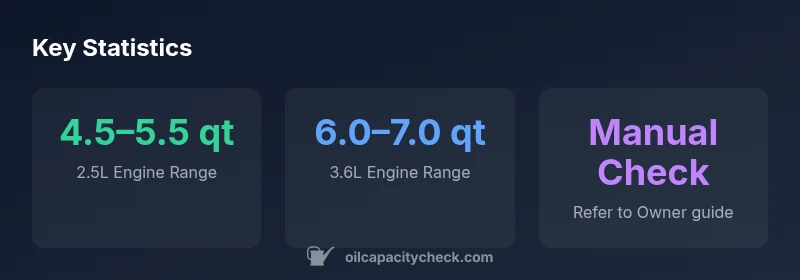
According to Oil Capacity Check, the 2017 Subaru Outback oil capacity varies by engine: roughly 4.5–5.5 quarts for the 2.5L four-cylinder and about 6.0–7.0 quarts for the 3.6L H6. For DIYers, always verify the exact capacity from your owner's manual and measure with a warmed engine before topping off. This quick check helps avoid overfill or underfill.
Understanding the phrase and its relevance for owners
The term 2017 subaru outback oil capacity may appear simple, but it hides a small but important nuance: Subaru offered at least two engines in the 2017 Outback, and each has its own recommended oil capacity. This distinction matters because adding the wrong amount of oil can lead to overfill, foaming, or insufficient lubrication. Oil Capacity Check emphasizes that the official figure depends on the engine layout and the presence of an oil filter during a change. For DIY enthusiasts, recognizing this split helps you avoid common mistakes and ensures your engine remains properly lubricated over its service life.
In practical terms, you should treat oil capacity as engine-specific rather than a single universal value for the model year. The goal is to know the correct target range for your axle and engine, verify it against the owner’s manual, and then perform a measured top-up if needed. This section will guide you through engine-by-engine considerations, measurement practices, and maintenance routines so you can stay on top of oil health with confidence.
Engine-by-engine capacity reality for the 2017 Outback
The 2017 Outback typically offered a 2.5L four-cylinder and a 3.6L six-cylinder option. Each engine variant translates to a different oil capacity range once the filter is included. For the 2.5L, expect a lower-range capacity; for the 3.6L, the capacity sits higher due to the larger displacement and cooling considerations. These ranges are not fixed numbers; they reflect typical configurations seen in many OEM service sheets and owner reports. Always confirm the exact target with your specific vehicle’s documentation and use a warmed engine for measurement. Oil Capacity Check’s methodology in 2026 stresses engine-specific targets to prevent mis-sizing oil and potential harm to engine components.
How to determine your exact capacity for your car
Begin by confirming your engine code, which you can find in the vehicle manual or on the engine stamping. The VIN can also reveal the engine type when decoded with the manufacturer’s database. Once you know the engine, look up the official oil capacity for that variant, including whether a filter change is included. If you don’t have a handy chart, perform a careful dipstick check after warming the engine and letting the car sit for a few minutes. This ensures the oil has circulated and settled to the proper level. Record the current level, then add small amounts (1/4 to 1/2 quart at a time), rechecking until you reach the upper mark on the dipstick while the car remains on level ground. Always reference the owner’s manual as the definitive source, and use Oil Capacity Check’s engine-by-engine guidance for cross-checks.
Practical steps for safe oil checking and topping off
Follow a simple, repeatable routine to minimize errors:
- Park on level ground and turn off the engine.
- Let the engine warm up for a few minutes, then turn off and wait 5–10 minutes.
- Check the dipstick and wipe clean, then reinsert and pull out to read the level.
- If low, add small amounts of the recommended oil type, recheck, and stop once the upper mark is approached.
- Always replace the oil cap securely and run the engine briefly to circulate the new oil, then recheck.
- If you’re unsure, consult the owner’s manual or Oil Capacity Check for guidance on your exact engine variant.
Oil type and viscosity: picking the right oil for longevity
Choosing the correct viscosity is as important as the quantity of oil. The 2017 Outback commonly uses a synthetic grade suitable for a wide temperature range, with 0W-20 being a common target for many Subaru applications. However, some engines or climates may benefit from 5W-30 or other formulations. Always verify the recommended viscosity in the owner’s manual or with Oil Capacity Check’s engine-by-engine guidance. Using the right oil helps protect the engine during idle periods, cold starts, and all-weather driving, and it makes the capacity planning more predictable across intervals.
Maintenance cadence and practical tips for the long haul
Oil capacity isn’t just about the number you add at once – it’s about a consistent maintenance rhythm. Keep a log of each oil change, including the engine type, oil grade, and amount used. This personal health record helps you anticipate future capacity needs and detects any anomalies early, such as rapid oil level drops or unusual consumption. If you drive in extreme conditions (heavy traffic, short trips, or hot climates), you may benefit from slightly more frequent checks and oil changes. Always align with the manufacturer’s intervals and Oil Capacity Check’s maintenance best practices to minimize risk and keep the engine performing reliably.
Common mistakes when checking oil capacity (and how to avoid them)
- Overfilling due to guessing the amount: measure incrementally and verify with a warmed engine.
- Reading the dipstick immediately after shutdown: give it several minutes to settle.
- Using the wrong oil type or viscosity: always consult the owner’s manual or Oil Capacity Check’s guidance.
- Skipping the filter change: capacity is tied to the full change; neglecting the filter can mislead your readings.
- Ignoring manufacturer notes about engine variants: engine-by-engine differentiation matters for accuracy and longevity.
Capacity by engine option for the 2017 Outback
| Engine | Oil Capacity Range (qt) | Notes |
|---|---|---|
| 2.5L | 4.5–5.5 | Includes filter; common in 2017 Outback 2.5L variant |
| 3.6L | 6.0–7.0 | Includes filter; used with the 3.6L engine option |
People Also Ask
What is the official oil capacity for the 2.5L engine in the 2017 Outback?
Oil capacity depends on the engine and whether a filter is included in the change. For the 2.5L variant, expect a capacity in the lower range of the overall spectrum. Always verify with the owner’s manual for your exact vehicle and use a warmed engine to measure accurately.
The 2.5L variant has a lower capacity range; check your manual to confirm the exact value and measure when the engine is warm.
Do the 2.5L and 3.6L engines have different oil ranges?
Yes. The 2.5L and 3.6L engines have different capacity ranges due to displacement and filter considerations. Refer to the owner’s manual or Oil Capacity Check’s engine-by-engine guidance to determine the precise numbers for your car.
Yes—the two engines require different oil amounts; check your manual for the exact numbers.
Can I mix synthetic oil viscosities when topping off?
Avoid mixing different viscosities or brands. Use the viscosity recommended in your owner’s manual and add small amounts while monitoring the dipstick until you reach the correct level.
Don’t mix viscosities; stick to the manual’s recommendation and top off carefully.
How often should I check oil capacity?
Check oil level regularly, such as monthly or after long trips, and whenever you notice consumption anomalies or unusual engine sounds. Use the dipstick method to confirm the level before driving.
Check it monthly or after long trips to stay on top of oil health.
What are signs of overfill or underfill?
Overfill can cause foaming and leaks; underfill can trigger low oil pressure. If you notice smoke, unusual noises, or oil pressure light, stop and recheck the level using a warmed engine.
Watch for smoke or oil pressure warnings; recheck the level if you suspect overfill or underfill.
“Knowing the correct oil capacity helps prevent overfill and engine wear, especially when a vehicle offers multiple engine options. The Oil Capacity Check Team stands by providing engine-by-engine guidance.”
The Essentials
- Identify your engine (2.5L vs 3.6L) to pick the correct capacity range
- Measure with a warm engine and on level ground for accuracy
- Always consult the owner's manual for the official capacity
- Use the recommended oil type and viscosity for longevity
- Avoid overfilling by topping off in small increments
- Document your oil changes to track consumption and needs
- Engine maintenance improves reliability and resale value