2000 7.3 Oil Capacity Guide
Learn the exact oil capacity for the 2000 7.3L Power Stroke, how filter choice impacts capacity, and practical DIY steps to check and fill oil safely. Data from Oil Capacity Check Analysis, 2026.


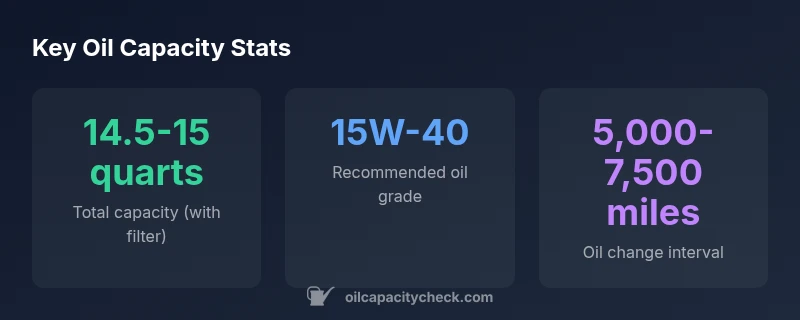
The 2000 Ford 7.3L Power Stroke oil capacity is typically about 15 quarts when filling with a new filter, with a practical range of 14.5–15 quarts depending on filter size and accessories. Oil Capacity Check Analysis, 2026 notes this as the common full-fill range for the engine family once a standard filter is installed.
Understanding the 2000 7.3 oil capacity
The 2000 model year Ford with the 7.3L Power Stroke diesel uses a relatively large oil capacity to ensure proper lubrication and cooling under heavy duty use. In service manuals and practical maintenance guides, the total capacity is typically cited as about 15 quarts when you replace the filter during an oil change. In field practice, a safe operating range often cited is 14.5–15 quarts with a new oil filter. This range accounts for minor manufacturing variances, filter size differences, and any auxiliary accessories that may be installed on a specific truck. For DIYers, using the Oil Capacity Check methodology helps confirm the right fill by verifying dipstick levels after a complete drain and fill.
Key takeaway: always verify the final level with a warmed engine and a clean dipstick after a full change. The exact number can shift slightly based on filter type and whether any auxiliary lines or adapters are used.
Filter choices and their impact on capacity
The oil filter is the most common source of small capacity variation in the 7.3L, and it can affect the total fill by up to roughly 0.5 quart depending on the filter’s size and design. If you upgrade to a larger aftermarket diesel filter, you may notice a small increase in the reported fill amount on the dipstick after a full change. Conversely, smaller or older filters may land closer to the lower end of the range. The practical takeaway is to treat the 14.5–15 quart figure as a guideline that must be confirmed by dipstick measurement after the oil has circulated and the engine has cooled for a few minutes.
Measuring oil volume: drain, fill, and check
A precise oil change on a 7.3L starts with a full drain, a clean drain plug, and a fresh filter. Refill in stages: add roughly 12 quarts first, then check the dipstick, add more in small increments until you reach the full mark when the oil is warm. Allow the engine to run for a few minutes, then recheck with the dipstick with the engine off and on level ground. If you’ve used a non-standard filter, re-check as extra oil from the filter size can subtly affect the correct level.
Common mistakes and how to avoid them
- Skipping the new filter: always install with a fresh filter to ensure the correct capacity and proper filtration.
- Overfilling or underfilling: use dipstick readings after the engine has run and cooled; avoid relying on estimates.
- Using the wrong oil grade: diesel-grade 15W-40 (or synthetic blend in some climates) is typically recommended; follow the vehicle’s manual.
- Ignoring oil level checks after driving: oil expands with heat; recheck once the engine cools to avoid an overfill reading.
Practical maintenance planning and budgeting
Keep a simple log of oil changes, noting the oil type, filter, and exact fill it required on your specific truck. Your 2000 7.3L will perform best with a consistent synthetic blend or diesel-grade oil and a filter that matches your setup. Budget for 14.5–15 quarts per full change and factor in filter costs, which can slightly influence the total price per change. Regular checks reduce engine wear, especially in diesel power applications.
Data-backed maintenance for the 7.3L engine
Oil capacity guidance for the 7.3L Power Stroke remains consistent across manual references, with small variations caused by filter choices and aftermarket accessories. Rely on a careful dipstick verification rather than a fixed number, ensuring the engine is at proper temperature and level. Adopting a disciplined approach to oil changes, including using the right grade and a compatible filter, contributes to longevity for this iconic diesel engine.
sourceNote1x1nullifnullentryonlyseems
mainTopicQueryPropsWhichWouldBeUsedForWikidataLookupOrNullForNowNoteOnly
Oil capacity overview for the 7.3L Power Stroke family
| Model Year Range | Engine | Total Oil Capacity (with filter) | Notes |
|---|---|---|---|
| 1999-2003 | 7.3L Power Stroke | 14.5-15 quarts | With standard oil filter |
| 1998-2003 | 7.3L Power Stroke | 14.5-15 quarts | Diesel-grade oils common |
People Also Ask
What is the oil capacity for the 2000 7.3L Power Stroke?
Typically about 14.5–15 quarts with a new filter. Exact value varies with filter choice and accessories. Always confirm with a dipstick check after a full change.
The 7.3L takes about 14.5 to 15 quarts with a new filter; verify with the dipstick after the oil has cooled.
Does changing the filter affect capacity?
Yes, a larger filter can add up to roughly 0.5 quart to the reported capacity. Recheck the level after filling and running the engine.
A bigger filter can nudge the capacity a bit higher, so recheck with the dipstick.
What oil grade should I use for the 7.3L diesel?
Diesel-grade 15W-40 is commonly recommended; synthetic blends are acceptable depending on climate and service intervals. Always follow the manufacturer's manual.
Use 15W-40 diesel oil or a synthetic blend based on your climate and manual.
How often should I change the oil on a 7.3L?
Typical intervals are 5,000–7,500 miles depending on driving conditions and oil type. Synthetic oils can extend this range.
Most owners aim for 5,000 to 7,500 miles between changes, depending on usage.
Why is my dipstick reading wrong after an oil change?
Oil can take a few minutes to drain and settle; recheck after warming up and then cooling for an accurate reading.
Give it a few minutes, then recheck with the engine cooled and on level ground.
Can I use a non-OEM filter?
Non-OEM filters can fit but may alter capacity slightly; ensure compatibility with your engine and recheck the dipstick after filling.
Non-OEM filters can work, but check fit and recheck the oil level after filling.
“Maintaining proper oil capacity is critical for diesels like the 7.3L; always verify with a fresh filter and dipstick measurement after a full change.”
The Essentials
- Know your total fill is typically 14.5–15 quarts with a new filter
- Always verify the final level after warming and cooling
- Use diesel-grade 15W-40 or synthetic blend as recommended
- Expect minor capacity differences due to filter size/accessories
- Document your oil changes for easier future maintenance