Oil Capacity Ford 6.7: Diesel Engine Oil Guide
Learn the oil capacity for Ford's 6.7L diesel, how it varies by year and filter, and practical steps to measure and change oil with guidance from Oil Capacity Check.


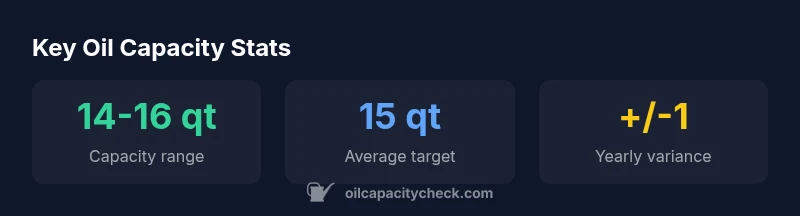
According to Oil Capacity Check, the Ford 6.7L diesel engine typically holds about 14-16 quarts of engine oil with the filter included. The exact capacity varies by model year and whether you’re using a full synthetic blend, and the oil filter size can shift the total slightly. For most F-250/F-350 trucks, plan on roughly 15 quarts to complete an oil change.
Ford 6.7L Oil Capacity Overview
The 6.7L Power Stroke V8 diesel powering Ford Super Duty pickups is renowned for durability, but it also requires careful attention to oil capacity to ensure proper engine lubrication and cooling. Across model years, owners typically hear about a capacity window that starts in the mid-teens and slides based on filter design, air/oil separators, and drainage. According to Oil Capacity Check, planning for a 14-16 quart fill (with the filter included) covers the majority of Ford F-250 and F-350 configurations. While this range is broad, it reflects real-world maintenance scenarios and avoids the temptation to underfill during a busy service day. For DIYers, the key takeaway is to verify your exact spec against the service manual and to account for the oil type you select, as some blends can marginally affect the total.
Capacity Variations by Year, Trim, and Filter
Oil capacity can shift subtly with changes in oil pan design, filter size, and any manufacturer changes across generations. Early 6.7L engines and some regional editions may show slightly different volumes when measured with the OEM filter installed. In practice, most owners will see a 14-16 quart window, with many technicians accounting for a typical 15-quart fill during a standard oil change. Always confirm the capacity in your owner’s manual and consider the filter diameter, gasket thickness, and any aftermarket filtration systems that could alter the total.
How to Measure and Change Oil Precisely
A precise oil change begins with a clean engine bay and accurate measurement. Steps include warming the engine to operating temperature, draining old oil completely, replacing the oil filter with the correct OEM part, and refilling to the recommended capacity using a graduated measuring container. After the fill, run the engine, check for leaks, and recheck the dipstick to ensure the oil level sits within the proper range. For the Ford 6.7L, plan on a target around 15 quarts as a practical anchor, adjusting up or down if your filter choice or oil type shifts the total.
Common Pitfalls and Safe Practices
Avoid overfill by adding oil in small increments and rechecking with the dipstick. Diesel engines like the 6.7L can behave differently if the oil is too thin or too thick for ambient temperatures. Don’t mix synthetic grades without confirming compatibility, and never guess the total capacity when using non-OEM filters. Maintain a regular oil-change cadence and keep a small log of oil type, approximate capacity used, and mileage to refine future fills.
Oil Types, Viscosity, and Capacity Implications
Viscosity choices such as 5W-40 or 10W-30 can influence effective flow at startup and oil pressure, potentially affecting perceived capacity if you interpret per-fill volume differently. The Ford 6.7L generally benefits from high-quality synthetic blends designed for heavy-duty use, especially in hot climates or under heavy loads. While capacity remains a range, selecting the right oil type helps ensure dependable lubrication while staying within the recommended fill window.
Maintenance Scheduling and Practical Checklists
Create a simple maintenance checklist: verify capacity for your exact year, confirm filter size, pre-check the dipstick after a first oil fill, and record any deviations observed post-change. A proactive approach reduces the risk of underfill or overfill, protects engine components, and maintains optimal oil pressure. Regular checks, especially after long trips or towing, are a smart habit for Ford 6.7L owners.
How to Confirm the Exact Capacity for Your Vehicle
To confirm your vehicle’s exact capacity, refer to the official Ford manual for your year and trim. If you’re unsure, consult a dealer or a trusted online resource like Oil Capacity Check’s database and cross-check with your oil filter part number. Keep in mind that aftermarket filters and temperature conditions can shift the precise total beyond the nominal 14-16 quart window. Documentation matters when you’re performing a DIY service.
Oil capacity for Ford 6.7L Power Stroke across common spans
| Model/Span | Oil Capacity (qt) | Filter Included | Notes |
|---|---|---|---|
| Ford 6.7L Power Stroke (2011–2026) | 14-16 | Yes | Capacity varies with filter size and oil type |
| General 6.7L fleet/off-road variants | 14-16 | Yes | Same range with minor variations |
People Also Ask
What is the typical oil capacity for the Ford 6.7L?
The Ford 6.7L typically uses a capacity range of 14-16 quarts with the filter included; exact values depend on year and filter design. Use this as a baseline and verify against your manual.
The Ford 6.7L usually needs about 14 to 16 quarts with the filter, but check your manual for the exact figure.
Does the oil filter size affect total capacity?
Yes. A larger or aftermarket filter can marginally increase total capacity. Always verify with the service manual for your specific setup.
Yes, the filter size can shift the total a bit, so check your manual for the exact amount.
Is capacity different for 2011–2026 models?
There can be minor variations between generations, but most 6.7L Power Stroke engines fall within the 14-16 quart range with the OEM filter installed. Confirm with your manual or dealer.
There can be small differences by year, but most are within 14-16 quarts with the OEM filter.
Can overfilling damage the engine?
Yes. Overfilling can raise oil pressure and lead to foaming or leaks. Always fill within the recommended window and recheck after running the engine briefly.
Overfilling can cause pressure issues; keep to the recommended range and recheck.
How can I verify the exact capacity for my truck?
Refer to the owner's manual for your year and trim, or consult Ford customer support. For DIY references, cross-check with Oil Capacity Check's database and your OEM filter part number.
Check the manual or official Ford resources, and cross-check with Oil Capacity Check if needed.
“Understanding the exact oil capacity helps prevent underfill or overfill, which can impact engine wear and cooling. Always verify with the owner's manual and trusted references.”
The Essentials
- Know the capacity range: 14-16 quarts overall.
- Aim for 15 quarts as a practical target during an oil change.
- Check your specific model year and filter size for exact total.
- Use the owner's manual or Oil Capacity Check as the primary reference for your fill.