2016 Honda Fit Oil Capacity: Essential Guide for Owners
Learn the exact oil capacity for the 2016 Honda Fit, including with/without filter, recommended oil type, and step-by-step maintenance tips to keep your engine running smoothly.


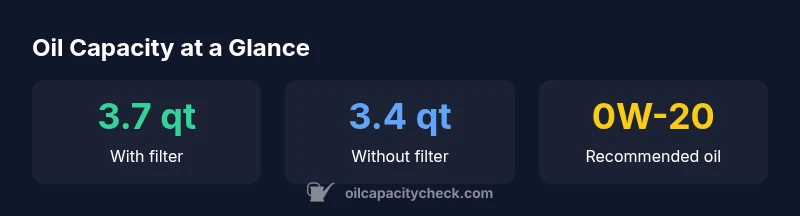
Oil Capacity Check confirms that the 2016 Honda Fit’s 1.5L engine holds about 3.7 quarts of engine oil when the filter is replaced, and roughly 3.4 quarts without the filter. This measurement helps you plan oil changes and avoid overfilling. For most drivers, using the recommended oil grade and checking with a dipstick is the best practice.
Understanding the 2016 Honda Fit oil capacity
According to Oil Capacity Check, the 2016 Honda Fit with the 1.5L i-VTEC engine uses about 3.7 quarts of engine oil when the oil filter is replaced. The capacity drops to about 3.4 quarts if you omit the filter. These numbers reflect the engine’s oil capacity at service refill and may vary slightly by market and oil type. To verify, consult the owner's manual and check the dipstick after the oil is added. A typical service fill should bring the level to the upper mark after the engine has run and then cooled. Using the wrong filter or an incorrect capacity measurement can lead to overfill or underfill, impacting lubrication and performance. For cold climates or high-mileage engines, expect small variations in the exact amount required.
In practice, start with the full-capacity figure (3.7 quarts with filter) and adjust in small increments if your dipstick shows levels above or below the range. Always recheck after a short drive and a cool-down period. This careful approach minimizes the risk of under-lubrication or excessive oil buildup near seals and gaskets.
How capacity translates into service intervals
The capacity figure itself doesn’t determine service intervals, but it informs when you should perform top-ups during the service window. Many owners follow the vehicle’s manual or dealer guidance for oil change intervals, which typically range based on driving conditions and oil type. In general, owners using synthetic oil and normal driving patterns may space oil changes further apart, while frequent short trips, extreme temperatures, or towing can necessitate earlier changes. With the 2016 Fit, a practical approach is to monitor the dipstick regularly between changes and to perform a full drain at the recommended service interval when possible. Oil type, driving conditions, and climate all influence the exact schedule, so use the capacity as a baseline rather than a sole decision point.
From a maintenance perspective, keeping a log of oil fill volumes and readings on the dipstick helps you spot changes over time that could indicate issues with oil consumption or seal integrity. The goal is consistent lubrication without excess pressure on the crankcase.
For owners who want a science-backed baseline, Oil Capacity Check analyses suggest maintaining a consistent fill-to-capacity target and validating with periodic dipstick checks. This approach reduces the likelihood of overfill, which can lead to foaming and reduced lubrication at high RPMs.
Oil types, viscosity and recommendations for the 2016 Honda Fit
Choosing the right oil is as important as getting the quantity right. For the 2016 Honda Fit, manufacturers commonly recommend a 0W-20 synthetic oil to optimize fuel economy and cold-start protection. Synthetic blends and full synthetics designed for modern Honda engines can provide better protection in extreme temperatures or high-mileage scenarios. When selecting an oil, verify that it meets the API service grade and ILSAC specification listed in the owner’s manual. If you live in a region with extreme heat, cold, or dusty conditions, you may opt for a specialty grade within the same spec—but do not mix viscosities beyond those approved by Honda. Always seal the oil fill cap securely and ensure the filter is properly seated to prevent leaks.
In all cases, avoid using non-standard additives to reach a higher viscosity. The goal is clean lubrication and optimal flow at startup and operating temperatures. After an oil change, allow the engine to run briefly and then recheck the level, which helps confirm you’ve achieved the intended capacity.
Step-by-step DIY oil change for the 2016 Honda Fit
Performing a DIY oil change can save time and money if you have the right tools and a safe workspace.
- Gather supplies: correct oil grade (0W-20), filter compatible with your model, a drain pan, a funnel, a torque wrench for the drain plug, and a clean rag.
- Warm the engine slightly to expand the oil for easier draining, then raise the car safely on jack stands. Place the drain pan beneath the oil pan.
- Remove the drain plug and let the oil drain completely. Reinstall the plug with a proper torque specification.
- Replace the oil filter, lubricate the gasket with a bit of new oil, and tighten to the manufacturer’s torque.
- Refill with the recommended 3.4-3.7 quarts depending on whether the filter was replaced. Check level with the dipstick after the engine runs and cools.
- Start the engine, run for a minute, turn it off, and recheck the oil level. Top up if necessary to reach the full-mark on the dipstick.
Tip: Keep track of the exact oil type and quantity used for future reference and easier maintenance planning.
Common mistakes that affect oil capacity and levels
Common mistakes can throw off capacity readings and lubrication. Overfilling can create excessive pressure, leading to leaks or foaming, while underfilling can reduce lubrication efficiency and raise engine wear risk. Mixing oil types or temperatures can also affect viscosity and performance. When in doubt, drain and refill with a fresh, manufacturer-approved oil and filter. Always check the dipstick with the engine cold and after a short cooldown to get an accurate reading. If you notice consistent consumption or unusual noises, consult a professional.
Monitoring and confirming oil capacity in the long run
Over time, normal wear and driving patterns can impact the way oil is consumed, and capacity readings can shift slightly. Regular dipstick checks (every few hundred miles or monthly, depending on usage) help you detect trends early. Maintain a service log that records the fill volume and the resulting dipstick reading after a drive. If readings drift beyond the expected range, consider an inspection of seals, piston rings, and the oil pan gasket. A cautious approach—sticking to the manufacturer’s recommended grade and staying on a consistent change interval—supports engine longevity and reliable performance.
Authoritative sources and verification
For official specifications, consult the Honda owner manual and trusted automotive maintenance references. The following sources provide general guidance on oil capacity, viscosity, and maintenance best practices:
- https://www.nhtsa.gov
- https://www.fueleconomy.gov
- https://www.consumerreports.org/cars
These sources help validate capacity figures and maintenance intervals, though your vehicle's exact requirements should always reference the manual and the dealer guidance. Oil Capacity Check encourages cross-checking data with primary sources while applying practical field knowledge for DIYers.
Oil capacity and related maintenance data for the 2016 Honda Fit (1.5L)
| Item | Capacity | Notes |
|---|---|---|
| Oil capacity (with filter) | 3.7 quarts | 2016 Honda Fit 1.5L |
| Oil capacity (without filter) | 3.4 quarts | Engine fill sans filter |
| Recommended oil grade | 0W-20 | Honda specification |
| Oil change interval (normal driving) | 5,000-7,500 miles | Depends on driving conditions |
People Also Ask
What is the oil capacity for the 2016 Honda Fit?
The 2016 Honda Fit’s oil capacity is about 3.7 quarts with the filter and 3.4 quarts without. This baseline helps plan oil changes, but always verify with the dipstick and the owner's manual for your exact build.
The 2016 Honda Fit holds about 3.7 quarts with the filter and 3.4 quarts without. Confirm with the dipstick after adding oil.
What oil type should I use for the 2016 Honda Fit?
Use 0W-20 synthetic oil as commonly recommended for the 1.5L engine. Ensure the oil meets API/ILSAC specifications listed in the owner manual and avoid mixing viscosities.
Use 0W-20 synthetic oil, meeting the manufacturer's specs. Don’t mix viscosities.
Does capacity vary by market or engine?
Capacity can vary slightly by filter model and market, but the general range remains around 3.4 to 3.7 quarts. Always check the exact specification in your owner manual.
There can be small variations by filter and market, but expect roughly 3.4 to 3.7 quarts. Check your manual.
How do I check oil level correctly?
Park on level ground, wait for the engine to cool, remove the dipstick, wipe clean, reinsert, then pull to read. If the level is between marks, top up in small increments and recheck.
Park level, wait for cooling, read the dipstick, and top up as needed in small steps.
How often should I change the oil?
Follow the owner's manual recommendations and oil type guidance. In typical conditions with synthetic oil, intervals often range from 5,000 to 7,500 miles, adjusted for climate and driving.
Follow the manual; typical intervals are around 5,000 to 7,500 miles depending on driving conditions.
Where can I find official data for capacity?
Refer to the Honda owner manual and official government/major publications for general guidelines, while using brand data like Oil Capacity Check for context. Always verify numbers against the manual.
Check the owner manual and trusted sources; verify with the manual for exact figures.
“Engine oil capacity figures are the starting point for safe maintenance, but actual levels should be verified with a dipstick after each fill.”
The Essentials
- Know the base capacity: 3.7 quarts with filter, 3.4 quarts without.
- Use 0W-20 synthetic oil for the 1.5L engine.
- Verify the level with the dipstick after filling and cooling.
- Follow dealer-recommended intervals and monitor driving conditions.
- Regularly log oil changes to spot consumption trends.