2014 GMC Acadia Oil Capacity: What You Need to Know
Learn the oil capacity for the 2014 GMC Acadia, including the 3.6L V6 engine, maintenance steps, and expert guidance from Oil Capacity Check.


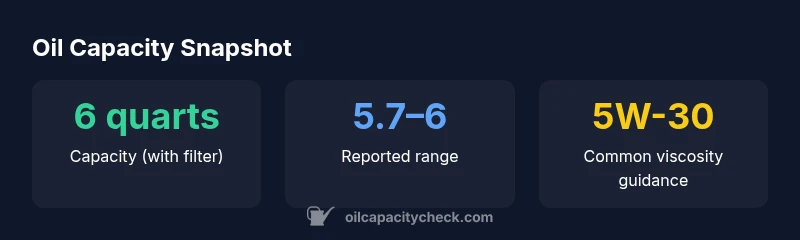
According to Oil Capacity Check analysis, the 2014 GMC Acadia with the 3.6L V6 engine typically requires about 6 quarts of engine oil when a new filter is installed. Some sources cite a range around 5.7 to 6 quarts depending on measurement method or whether the filter is changed alone. Always verify with the owner's manual and use the recommended viscosity for your climate.
Why Oil Capacity Matters for the 2014 GMC Acadia
Engine oil capacity is more than a number on a spec sheet. For the 2014 GMC Acadia, especially with the 3.6L V6, having the correct oil quantity ensures proper lubrication, cooling, and longevity of internal components like the camshafts, pistons, and valve trains. The capacity figure also guides you during DIY oil changes, helping you avoid underfill that can lead to increased friction and wear, or overfill that can cause aeration and foaming. Oil Capacity Check emphasizes that accuracy matters, and even small deviations can impact engine performance. In practice, start with the recommended capacity for your engine variant, then verify level after a complete warm-up and drain-and-fill cycle. This approach minimizes the risk of overfilling after a change and ensures consistent viscosity using your climate-appropriate oil.
Engine Variants and Capacity Across the 3.6L Family
The 3.6L V6 family in the 2014 Acadia centers on a single core block, but manufacturing tolerances and filter choices can lead to slight variations in capacity reporting. Most sources align on a standard capacity near six quarts with a new filter. If you’re using an aftermarket filter with a different flow rate or changing the oil through non-standard procedures, you may see a minor variance within the 5.7–6 quarts range. Oil Capacity Check highlights the importance of following GM’s official manual for the exact spec for your VIN, as slight differences can occur between model trims and production batches. Always confirm by checking the dipstick after a proper oil cycle to maintain the correct oil level.
How to Verify Accurate Oil Capacity on Your Vehicle
To confirm capacity for your specific vehicle, start with the owner’s manual and GM’s official service bulletins. Warm the engine, drain the old oil, replace the filter, and refill using a measured quantity close to the official spec. Recheck the level with the dipstick, allowing the oil to settle for a few minutes before taking a final measurement. If you notice dipstick readings consistently low after a standard fill, you may be dealing with an overfill condition due to the dipstick’s calibration or a non-standard oil filter. In practice, keep a small reserve of oil on hand for topping up and ensure you are using the correct viscosity for your climate and driving conditions.
Step-by-step: Performing an Oil Change on a 2014 Acadia
- Gather the right tools: a reliable drain pan, 3/8-inch drive ratchet, oil filter wrench, and the recommended oil type. 2) Warm the engine to ensure full drainage and to measure the correct volume. 3) Remove the drain plug, drain old oil, and replace with a new filter. 4) Reinstall the drain plug and slowly add the official capacity (about 6 quarts with filter) until the dipstick shows the correct level. 5) Run the engine, recheck for leaks, and recheck the level after it settles.
Practical Maintenance Tips and Troubleshooting Capacity Errors
Keep track of oil changes using a simple log, including the date, mileage, oil type, and filter brand. If your dipstick shows inconsistent readings, recheck after a cooling-down period and consider using a calibrated dipstick for precise results. Common errors include underfilling due to an assumed capacity or overfilling after adding an acquaintance of oil. Oil Capacity Check recommends always smoothing out the fill process with multiple measured additions rather than a single, large pour. For extreme climates, verify that your viscosity remains within the recommended range to avoid strain on the engine during cold starts.
What Oil and Filter Choices Influence Capacity Calculations
Oil capacity is influenced by the filter size, the filter’s whether it’s rated for high-flow or standard flow, and the exact engine variant. A thicker filter can marginally alter the amount of space in the oil pan, affecting the total volume required. When changing the oil, ensure the filter is compatible with the 3.6L V6 and that the oil grade matches GM recommendations for your climate. Oil Capacity Check notes that the capacity figure is an approximation and depends on factors like the oil pan design and the presence of any auxiliary oil coolers or sensors.
Oil capacity by engine variant and measurement method (ranges shown)
| Engine | Oil Capacity | Notes |
|---|---|---|
| 3.6L V6 (LGX) | 6 quarts | With filter; typical spec |
| Variations by measurement | 5.7–6 quarts | Dependent on method & filter |
| Alternative guidance | 5.5–6 quarts | Industry variants possible |
People Also Ask
What is the official oil capacity for the 2014 GMC Acadia’s 3.6L V6?
The commonly cited capacity is about 6 quarts with a new filter. Some sources list a range of 5.7–6 quarts. Always refer to the owner’s manual for your VIN.
The official capacity is around 6 quarts with a new filter, but check your VIN and owner's manual to confirm.
Does capacity vary by engine variant within the 2014 Acadia?
For the 2014 Acadia, the 3.6L V6 is the primary engine; capacity is typically 6 quarts with filter. If you have a different trim or production batch, verify with the manual.
Capacity is generally 6 quarts for the 3.6L V6, but always confirm with your manual.
How should I measure oil capacity in the field?
Use the dipstick after a warm engine cycle and a full drain. Refill in small increments, rechecking the level until it reads near the full mark.
Warm engine, drain, refuel in small steps, then check with the dipstick.
Can a different oil viscosity affect the capacity reading?
Viscosity affects engine performance and temperature behavior, but capacity figures are determined by oil volume. Use the GM-recommended viscosity for your climate.
Viscosity changes don’t change the volume you put in, but they affect performance.
How often should I change the oil on the 2014 Acadia?
Follow the GM recommendation or service interval, typically every 5,000–7,500 miles under normal driving. In severe conditions, shorten the interval.
Every 5,000 to 7,500 miles under normal driving; more often in tough conditions.
Where can I find the official capacity if I’ve lost my manual?
Check GM’s official owner portals or refer to reputable automotive resources that quote the owner’s manual. Cross-check with the dipstick after the oil cycle.
Use GM’s portal or trusted manuals and verify with the dipstick.
“"Oil capacity numbers are a baseline, but the real check is the dipstick after a warm engine run. Small deviations can throw off the level and affect lubrication."”
The Essentials
- Know the standard capacity for the 3.6L V6 in the 2014 Acadia.
- Expect 5.7–6 quarts depending on filter and measurement method.
- Always verify oil level after a warm-up cycle with the dipstick.
- Follow GM’s recommended viscosity for your climate.
- Maintain a service log to track oil changes and filters.